
Raffle Ideas: 50+ Creative Ideas
Finding the right raffle ideas can make fundraising campaigns engaging, attract participants, and help them to…
Read More →
Short on time? Let AI do the work. Get the key points.
Understanding the difference between Not for Profit vs Nonprofit is crucial for anyone who wants to begin an organization, raise funds, or support an impactful cause.
Although the terms not-for-profit and nonprofit may seem similar, they differ in their purpose, legal requirements, funding strategies, and operational goals.
But understanding these differences help founders, donors, volunteers, and community leaders to select the right type of organizations and comply with regulations.
A nonprofit organization is established to serve the public through educational, religious, healthcare, environmental, charitable, or humanitarian activities.
While a not-for-profit organization is formed to benefit its members by promoting shared interests such as sports, arts, recreation, or professional development.
While they may differ in their eligibility for grants, tax benefits, fundraising opportunities, and reporting requirements.
This Not for Profit vs Nonprofit guide will walk you through the crucial differences between two organization models in a simple and understandable way.
You will learn about their purpose, governance, funding sources, tax considerations, benefits, and real-world examples. We will also discuss how modern fundraising platforms like SimplyGiv can help organizations to collect online donations, engage supporters, and run successful fundraising campaigns.
Whether you are comparing a nonprofit vs not-for-profit organization, researching charitable organizations, or deciding which pricing structure fits your mission, this blog will give you the practical insights that you need to make informed decisions and build a sustainable organization that creates lasting impact.
Also Read: Silent Auction Rules Every Nonprofit Should Know
A nonprofit organization is an organization formed to serve the people instead of generating profits for owners or shareholders.
The main purpose of a nonprofit organization is to create a positive impact on the society by supporting different causes like education, healthcare, environmental conservation, and community development.
If nonprofits earn surplus income then they reinvest that revenue into their programs, services, and future initiatives to achieve their mission instead of distributing it as a profit.
Common activities of a nonprofit organization include:
The success of a nonprofit is measured by the positive impact they make in people’s lives and the communities it serves rather than by the profit it generates.
Also Read: How to Run a Silent Auction: Complete Guide for Nonprofits
Most nonprofit organizations have common characteristics that help them to achieve their mission and maintain public trust. These include:
Some common examples include:
These organizations are formed to improve society and support causes that are beneficial to the public.
Also Read: How to Track Event Attendance for Nonprofit Fundraisers and Community Events
The purpose and mission of nonprofit organizations is to benefit the people through charitable, educational, healthcare, or social initiatives. The not-for-profit organizations are formed to serve the interests of their members through shared hobbies, community programs.
Nonprofit organizations depend on donations, grants, sponsorships, and fundraising campaigns to support their mission. While not-for-profit organizations earn revenue through membership fees, event registrations, and local fundraising activities.
Also Read: 20 Creative Fundraising Virtual Event Ideas for Nonprofits
Neither nonprofit nor not-for-profit organizations distribute profits to owners or shareholders. Rather if there is any surplus income generated then it is reinvested into programs, services, facilities, or activities that support the purpose of the organization.
Many nonprofits qualify for tax-exempt status based on local laws. While not-for-profit organizations may also have tax benefits, their eligibility depends on their structure and purpose.
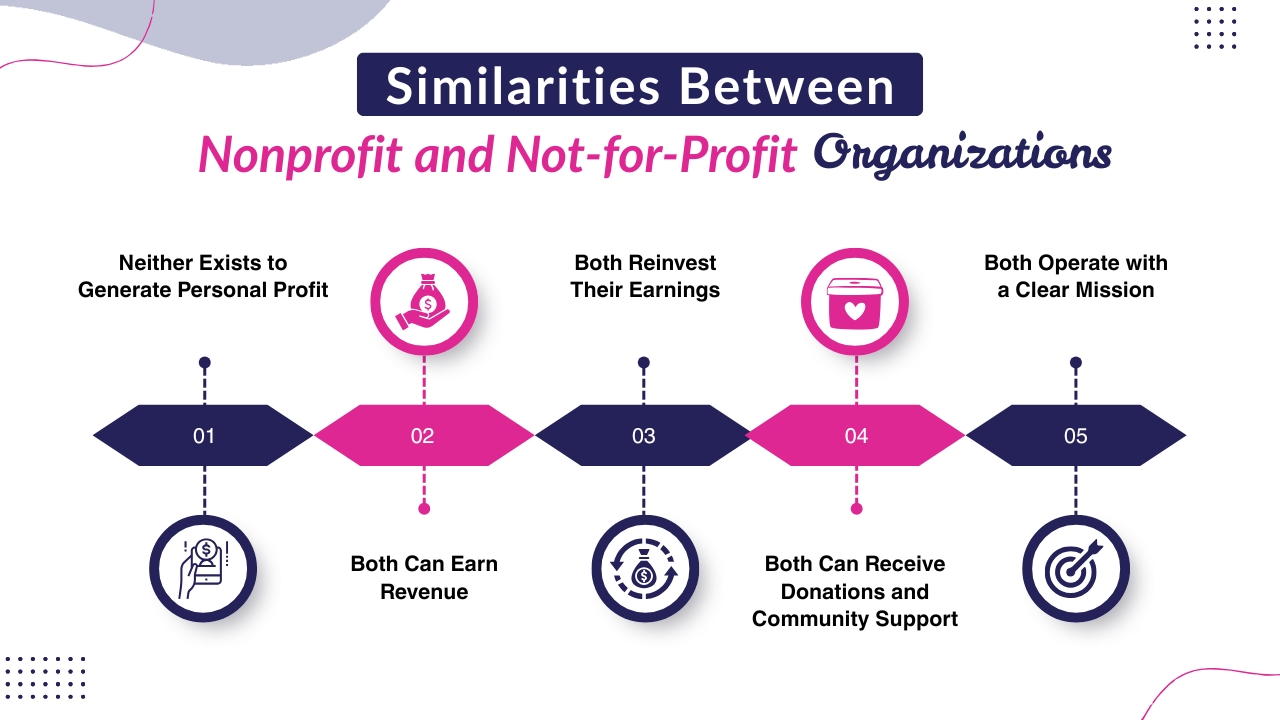
Although nonprofit and not-for-profit organizations have different purposes and structures, they share many important characteristics. Nonprofit and Not-for-profit are committed to serve a mission instead of generating profits for individuals which makes them beneficial to society.
One of the biggest similarities between nonprofit and not-for-profit organizations is that they are not established to make profits for owners, shareholders, or investors.
Unlike other traditional businesses, nonprofits and not-for-profit organizations do not distribute profits to individuals. Instead if they collect any surplus income, then it is used to support their mission and improve their operations.
While the main focus of such organizations is to create value for the communities or members they serve instead of achieving maximum financial returns.
Also Read: How to Run a Successful Donation Campaign (Step by Step)
A common misconception is that these organizations cannot generate income. But in reality, both nonprofit and not-for-profit organizations can legally earn revenue through many different activities.
Their revenue comes from membership fees, donations, fundraising campaigns, sponsorships, service fees, and grants where eligible.
The major difference between nonprofit and not-for-profit is that the revenue earned is reinvested into the organization for supporting its mission, programs, or member services rather than distributing it as a profit.
Both nonprofit and not-for-profit use their income in the same way. Any surplus funds raised by both organizations are reinvested to improve their operations, facilities, purchase equipment, or support future initiatives.
This approach allows them to continuously serve their mission by ensuring long-term sustainability. Reinvested earned money helps both organizations to increase their impact and meet the needs of the people or communities they support.
Both nonprofit and not-for-profit organizations receive donations from individuals, businesses, and local communities. Through donations, sponsorships, volunteer efforts, and fundraising events, both nonprofits and not-for-profit organizations achieve their objectives.
Many organizations organize charity events, awareness campaigns, community programs, and online fundraising initiatives to generate more revenue.
With strong community involvement nonprofit and not-for-profit organizations can increase their reach and deliver more value to the society.
Also Read: Top Online Fundraising Ideas to Grow Donations Fast
Every nonprofit and not-for-profit organization has a clear mission or purpose. Their goals can be to improve organization, support healthcare, preserve culture, and strengthen local communities.
With a well-defined mission nonprofits and not-for-profit organizations can guide their decisions, planning, and allocating resources.
It helps them to build trust among donors, volunteers, members, and supporters that makes it easier for nonprofits and not-for-profit organizations to attract more funds, encourage more participation from supporters, and create an impactful, long-term impact on the society.
Often people use these terms nonprofits and not-for-profit interchangeably because both organizations operate with a mission to generate profits for owners and shareholders.
Nonprofit and not-for-profit have many common characteristics that makes it difficult for individuals to differentiate between these organizations.
But both nonprofit and not-for-profit have the same operating principles, legal definitions, purpose, and eligibility for certain benefits may differ based on the country and governing regulations.
Some of the main reasons for this confusion include:
Also Read: How to Use Data to Improve Donor Retention in Your Church
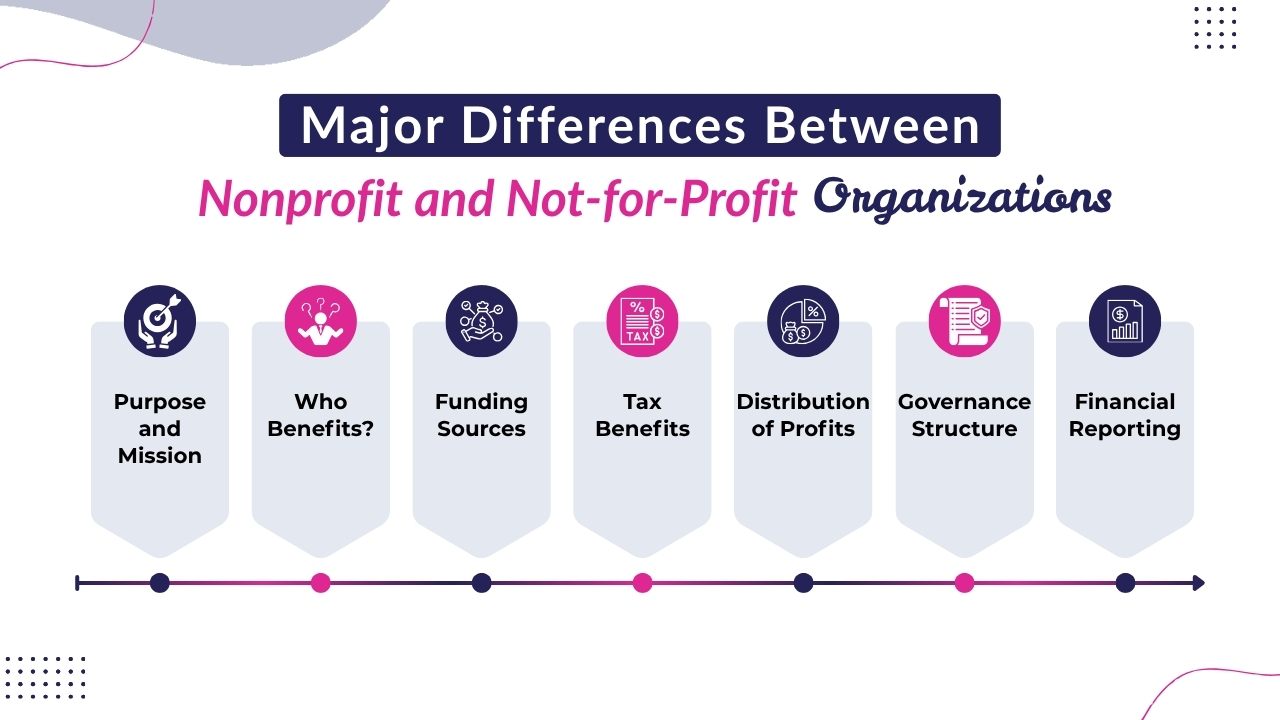
Both nonprofit and not-for-profit organizations have different purposes and missions for people they want to serve. While a nonprofit organization is beneficial for people for social, educational, healthcare, religious, environmental, or humanitarian needs.
Every program, service, and financial decision supports their mission of improving a positive impact on the lives of people whom they serve.
Common instances of nonprofit activities include:
While a not-for-profit organization is formed to serve the interests of their members instead of serving the general public.
Common instances include:
Although not-for-profit organizations are beneficial to their communities, their main focus is to provide value, services, and opportunities for members with shared interests.
Also Read: How to Set Up Multiple Funds and Split Giving Online
One of the major differences between nonprofit and not-for-profit organizations is the people to whom they will be beneficial.
A nonprofit organization is formed to serve the public or community by addressing their social, educational, healthcare, environmental, and humanitarian needs.
While a not-for-profit organization is formed to provide services and value to their members who have a common interest.
Examples of beneficiaries of nonprofit organizations include:
Examples of beneficiaries of not-for-profit organizations include:
This distinction between nonprofit and nonprofit organizations is important because it impacts their eligibility for grants, charity, and tax-exempt benefits under local rules.
Funding is essential for both nonprofit and not-for-profit organizations. While the way both nonprofits and not-for-profit organizations raise funds depends on their purpose and activities.
Nonprofit organizations depend on many funding sources to support their mission and ensure long-term financial sustainability.
While not-for-profit organizations generate income with member-based activities and local community support.
Common funding sources for nonprofit organizations include:
Common funding sources for not-for-profit organizations include:
Though some not-for-profit organizations accept donations, their primary source of income is from activities and services which directly benefit their members.
Also Read: 25 Online Fundraising Ideas listicle
Tax benefits are one of the important differences between nonprofit and not-for-profit organizations. Based on each country and local rules, tax rules differ for both nonprofit and not-for-profits.
Nonprofit organizations that meet certain legal requirements may qualify for tax-exempt status, which allows them to reduce certain tax obligations. In certain jurisdictions, donors who donate to eligible nonprofits may also receive tax deductions.
Key points to remember include:
One of the similar characteristics of nonprofit and not-for-profit organizations is that they do not distribute profits to owners, shareholders, or investors.
Instead if they receive any surplus income, then it is reinvested to support the mission of the organization, improve services, and ensure long-term sustainability.
Reinvesting this revenue allows these organizations to increase their activities, improve operations, and serve their intended beneficiaries.
Nonprofit organizations typically use surplus funds to:
Not-for-profit organizations generally use surplus income to:
Both nonprofits and not-for-profit organizations reinvest their revenue to make a strong impact on the society, achieve their goals, and continue by providing services to the communities or members they serve.
Also Read: SimplyGiv Introduces AI Built Specifically for Modern Fundraising
With a strong governance structure nonprofit and not-for-profit organizations operate effectively to maintain transparency, accountability, and legal compliance.
Although nonprofit and not-for-profit organizations have leadership teams, their governance structure differs based on size, purpose, and operational requirements.
Nonprofit organizations are typically governed by:
In nonprofit organizations, the board looks after finances, approving budgets, ensuring legal compliance, by setting organizational policies and guiding their long-term strategic plans.
Not-for-profit organizations have a simpler governance structure which includes:
In these organizations leadership positions are often elected by members for fixed terms. These leaders look after daily operations, manage finances, organize activities, and represent the interests of the organization’s members while ensuring smooth and responsible management.
Financial reporting has an important role in building trust and accountability for both nonprofit and not-for-profit organizations.
However the financial reporting of these organizations differ based on their structure, funding sources, and applicable laws.
Key aspects of financial reporting include:
Also Read: How to Grow a Church Fast Without Losing Your Mission
Operating as a nonprofit organization has many benefits that help them to achieve long-term impact on the society and build their trust and confidence.
Nonprofit organizations usually earn more trust from people because these organizations focus on charitable and community-based missions. This credibility encourages individuals, businesses, and volunteers to support their work.
Many government agencies, charitable foundations, and international organizations provide grants for eligible nonprofit organizations, thereby providing financial support for their programs and projects.
Qualified nonprofits may get tax-exempt status and other financial benefits which help them to allocate more resources toward achieving their mission.
Also Read: 25 Online Fundraising Ideas for Nonprofits to Raise More Donations – Simplygiv
As nonprofits are beneficial to people, they are often more successful in raising donations from people, corporations, and philanthropic organizations.
Nonprofits have a more lasting positive impact on the society by supporting education, healthcare, environmental conservation, poverty reduction, disaster relief, and community development initiatives which improve lives over time.
Not-for-profit organizations have many benefits, specifically for groups who aim to serve members that have shared interests or community goals. Such flexible structure and collaborative approach make such organizations well suited for local clubs, associations, and recreational groups.
Many not-for-profit organizations have a simpler organizational and operational structure than larger nonprofit organizations. This makes it easier to form such organizations and manage especially for local community groups, sports clubs, and hobby associations.
In not-for-profit organizations members have a big role in planning events, volunteering, and making decisions. This level of high participation helps nonprofits to build stronger relationships with communities, encourage teamwork, and build a sense of belonging in the organization.
Also Read: Digital Church Growth Strategies: How to Reach More People Online
Not-for-profit organizations can quickly adapt or change their activities, programs, and events based on the changing needs and interests of their members. This flexibility helps such organizations to remain valid and responsive.
Many not-for-profit organizations depend on volunteers who give their time, skills, and expertise. With active volunteer involvement, not-for-profit organizations can reduce operational expenses while increasing participation from supporters and ensuring the long-term success of such organizations.
Understanding the differences between not-for-profit and nonprofit organizations has become essential for individuals before starting an organization as it helps them to select the right structure to achieve their mission.
Although both nonprofit and not-for-profit reinvest surplus income instead of distributing profits. But both nonprofit and not-for-profit differ in their purpose, beneficiaries, funding sources, governance, and tax considerations.
Nonprofit organizations are established to serve the public through charitable and social initiatives, while not-for-profit organizations mainly focus on supporting the interests of their members.
By selecting the right organizational model, it can impact fundraising opportunities, legal compliance, financial sustainability, and long-term growth.
As online giving keeps increasing, fundraising platforms like SimplyGiv help such organizations to reach more supporters, accept secure online donations, and manage fundraising campaigns easily.
Whether you are planning to start a charity, a community association, or a member-based club, understanding these differences will help to make informed decisions.
Having the right organizational structure and effective fundraising strategies helps organizations to create a lasting impact and successfully achieve their goals.
If you still have any query about not-for-profit vs non profit guide, then you may Schedule a Call at SimplyGiv and we are more than happy to assist you.