Church Donation Kiosks: How Technology Is Modernizing Sunday Giving
In today’s digital world, church donation kiosks are changing the way churchgoers donate, making Sunday giving…
Read More →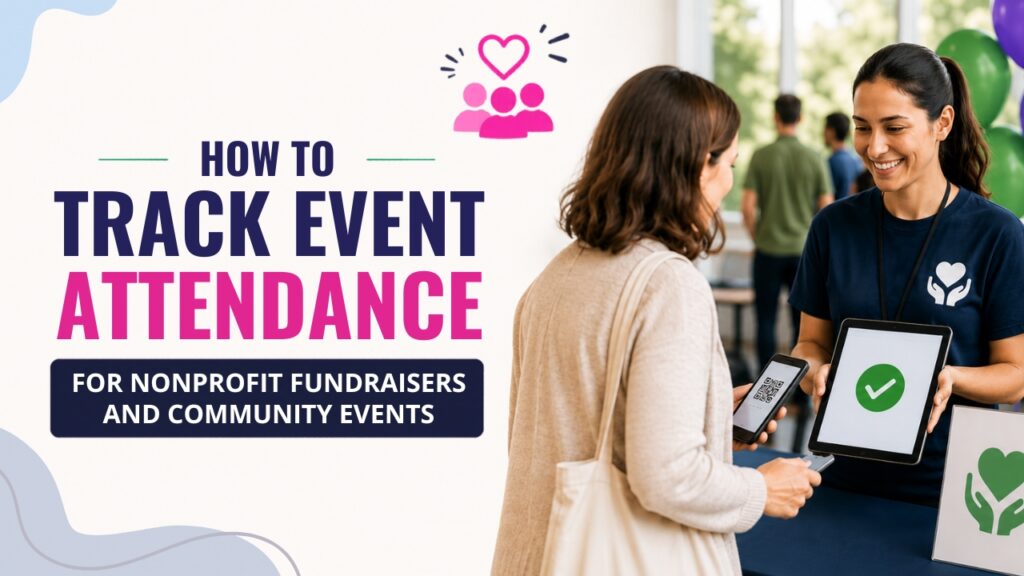
Short on time? Let AI do the work. Get the key points.
Effective event attendance tracking for nonprofit fundraisers and community events has become essential for nonprofits who want to increase the success of fundraising, improve relationships with the community for a long-term.
Whether nonprofits organize charity galas, virtual fundraisers, awareness campaigns, church gatherings, or community outreach programs, having the right data about event attendance helps nonprofits to track supporter’s participation, donor behavior, and overall performance of events.
Using modern event management software, helps nonprofits to simplify online registration, manage guest check-ins, monitor real-time donor participation, and gather insights about event attendees.
When nonprofits provide features like QR code check-ins, mobile event apps, digital RSVP systems, and automated reporting, event attendees can have better event experiences.
Effective attendance tracking strategies can improve coordination among volunteers, and enable personalized communication with donors after the event.
When nonprofits send personalized follow-up messages, impact updates, and future event invitations, it helps them to turn first-time attendees into long-term supporters and recurring donors.
Nonprofits must change their strategies beyond guest tracking and focus on establishing data-driven donor engagement strategies.
By implementing nonprofit event management, fundraising analytics, donor engagement, and event attendance tracking systems, nonprofits can maximize community participation and fundraising growth.
Ultimately, a well-planned event attendance tracking system helps nonprofits to organize successful events, improve participant experience, and increase online donations.
Also Read: How to Run a Successful Donation Campaign
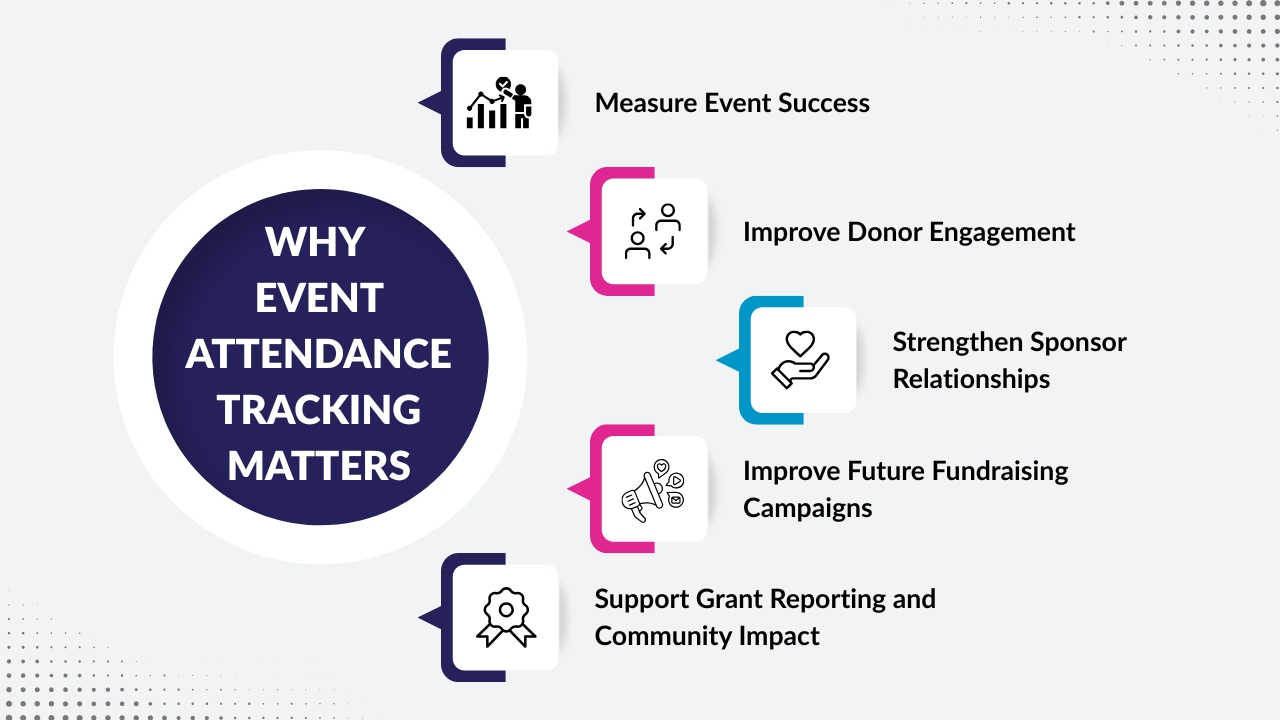
Event attendance tractions goes beyond simply tracking how many people attend a fundraiser or community event. For nonprofits, it is an essential strategy which helps to measure supporter engagement, improve donor relationships, and strengthen future fundraising campaigns.
The right event attendance tracking allows organizations for long-term community growth. Whether nonprofits are organizing charity events, virtual fundraisers, awareness campaigns, or volunteer programs, nonprofits can use event attendance tracking through which they can make smarter decisions and increase overall event success.
Tracking the success of events helps nonprofits to check whether their outreach and strategies were impactful. When nonprofits compare event registrations with event attendance, they gain insights about the interest of their audiences.
For example:
Measuring this data is crucial because it helps organizations to improve their event planning in future and also marketing strategies.
Also Read: Digital Church Growth Strategies
People who attend events of nonprofits are most likely to support the nonprofits again as supporters feel emotionally connected to the mission.
Tracking event attendance helps nonprofits to establish stronger relationships through personalized communication.
Key benefits include:
Also Read: What is Donor Management Software
Sponsors need clear proof that their support created more visibility and an impact on the community. Having an attendance report helps nonprofits to provide results about events success and improve future sponsorship opportunities.
Important sponsor metrics include:
Also Read: How to Use Data to Improve Donor Retention in Your Church
Event attendance data helps nonprofits to find the fundraising activities that performed well. With this data nonprofits can make better decisions for future fundraising campaigns.
Useful insights include:
Also Read: Top Online Fundraising ideas to Grow Donations Fast
Many grant providers require nonprofits to show measurable community participation and outreach success. Tracking event attendance provides reliable documentation for reports and funding applications.
Attendance records support:
An effective nonprofit attendance goes beyond collecting the data about who attended an event. Rather it combines multiple systems and processes which helps nonprofits to improve donor engagement, performance of fundraising campaigns, volunteer coordination, and long-term relationships with donors.
An effective nonprofit attendance tracking strategy includes event registration systems, donor data collection, volunteer management tools, attendance analytics, and also post-event follow-ups.
All these strategies offer nonprofits with insights into attendee behavior and effectiveness of the campaigns.
Modern event attendance tracking systems nonprofits can collect data before, during, or after events.For instance, nonprofits can use online registration forms, QR check-ins, and mobile event apps to easily manage attendees and improve event experiences.
Most importantly, nonprofits should not consider attendance tracking as a different administrative task. Rather they should use attendance data to build relationships with donors, donor engagement, and future fundraising strategies.
With a strong attendance tracking strategy nonprofits can create more successful mission events, build community trust, and generate fundraising growth.
Fundraising galas are formal nonprofit events which require detailed attendance management to ensure smooth operations and better donor management.
Tracking event attendee activity helps nonprofits to track fundraising success and sponsor visibility.
Important tracking areas include:
Also Read: Winter Fundraising Ideas that Actually Works
Charity walks, marathons, and fitness events include a large number of participants, volunteers, and fundraising teams. With attendance tracking nonprofits can manage logistics and track fundraising performance.
Key tracking areas include:
Also Read: Easy Christmas Fundraising ideas You Can Start Today
Community outreach programs help nonprofits to connect directly with local communities. Attendance tracking helps to track public participation and program impact.
Organizations should track:
Also Read: 10 Powerful ThanksGiving Sermons
Virtual fundraisers use digital attendance tracking to track participant engagement, supporter involvement, event performance, improve outreach strategies, and maximize fundraising success effectively.
Key virtual metrics include:
Also Read: What is Donation Kiosk
Hybrid events combine in-person and virtual participation, requiring nonprofits to track multiple engagement channels simultaneously.
Organizations should monitor:
Also Read: How to Start a Church Step to Step Guide for New Pastors
Different nonprofit events require different attendance tracking methods to track donor engagement, fundraising performance, and improve community participation.
Accurate event attendance tracking helps nonprofits to collect donor data, improve future planning, increase donor retention, and understand audience behavior.
Fundraising galas are formal nonprofit events which involve donors, sponsors, volunteers, and community leaders. Such events often require detailed attendance management to ensure there is smooth coordination and maximize donor engagement.
Tracking attendee participation helps nonprofits to measure fundraising success and evaluate sponsor visibility.
Important tracking areas include:
Event attendance data collected from fundraising galas helps nonprofits to identify their major supporters and improve future donor outreach strategies.
Events like charity walks, marathons, cycling events, and fitness challenges involve a large number of participants and volunteers. Event attendance tracking is essential for managing registrations, tracking event participation, and fundraising results.
Key tracking areas include:
When nonprofits track these activities can improve logistics, participant experiences.
Community outreach programs and church faith based events help nonprofits to connect directly with local audiences and improve public engagement.
Tracking such events helps nonprofits to measure the impact of their faith based events on the community and find the strategies that need improvement.
Organizations should monitor:
For faith-based organizations, tracking member attendance and outreach participation also supports future ministry planning and donor engagement efforts.
Also Read: Short Thank You Messages for Donations
Virtual fundraisers and hybrid events require advanced attendance tracking systems as they involve both online and in-person audiences. Nonprofits must track digital engagement and participation across multiple platforms.
Important virtual tracking metrics include:
For hybrid events, nonprofits should track:
Such data helps nonprofits to evaluate audience preferences and improve future digital fundraising strategies.
Also Read: Digital Church Growth Strategies
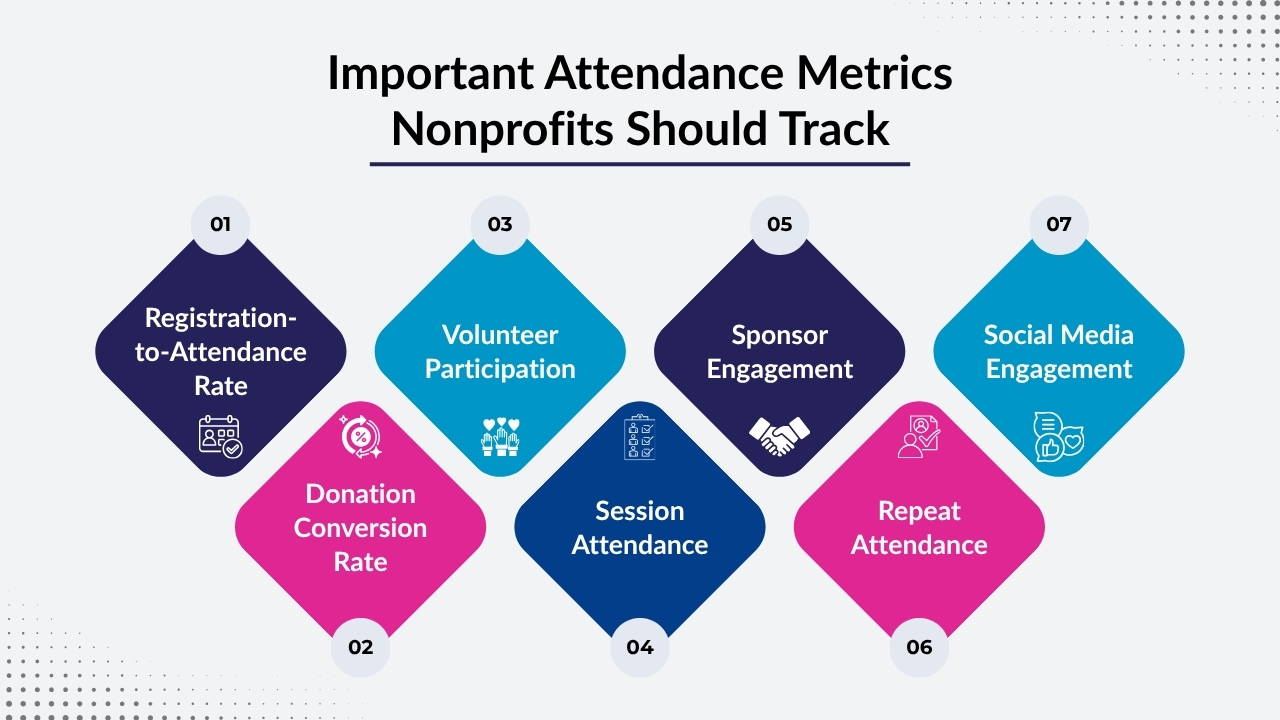
Tracking important attendance metrics helps nonprofits to measure event success, improve donor engagement, and strengthen future fundraising strategies.
These insights help nonprofits to understand how attendees interact with events, sponsors, and campaigns, causing better planning and higher impact.
This metric measures how many registered participants attended the event. This helps nonprofits to evaluate the interest of supporters in your events, communication effectiveness, and also about their drop-off reasons.
It tracks the percentage of attendees who made a donation during or after the event which shows the performance of fundraising and success of donor engagement.
Also Read: Online Fundraising ideas for NonProfits to Raise More Donations
Tracking volunteer participation measures the number of volunteers who attended and actively contributed during the event. When volunteers participate, it strongly improves event execution and also community involvement.
Tracking session attendance is essential for conferences, workshops, and training programs because this metric reveals the sessions that gained the most attention from donors and will help nonprofits to plan future events successfully.
Tracking sponsor engagement tracks the way event attendees work with sponsors through booths, branding, or digital promotions which reveals the importance of sponsors and further improves partnerships with sponsors.
Tracking repeat attendance tracks the count of supporters who attended several nonprofit events over time which helps nonprofits to know about donor loyalty and donor engagement with the nonprofits in the long-term.
Tracking social media engagement measures visibility on events and interaction of audiences through shares, comments, hashtag usage, likes, mentions, and livestream participation, which helps nonprofits to measure their reach on social media and also supporter engagement effectively.
Also Read: How to Market Your Church for Growth
Simplifying registration increases event participation and improves user experience. When nonprofits give long registration forms then it may discourage supporters to register.
Further if registration forms are designed for mobile-friendly pages then it becomes easier for supporters to register events through their mobile phones. Further when nonprofits send instant confirmation emails to attendees keeps them engaged even before the event.
Email marketing is essential for nonprofits to increase the number of people attending the events. Because sending a well-written email before the event to the supporters helps nonprofits to keep their attendees informed about the event and also ensures maximum participation from donors because it reduces chances of any missed event registrations.
After the event, nonprofits must send follow-up thank messages to attendees, share event highlights, collect feedback, and encourage ongoing support and future donations effectively.
Also Read: How to Use Your Data to Improve Donor Retention in Your Church
Nonprofits must promote through social media which will increase visibility of events and audience engagement. Sending engaging content helps nonprofits to gain audience interest, increase visibility of events, and encourage supporters to actively participate and share the upcoming events with their family and friends.
Nonprofits must also encourage their supporters to repost the content of the event because it increases the reach of your event, attracts new people, and also increases community involvement even before, during, or even after the event.
Also Read: Church Events Management Best Practices With Tools
When nonprofits offer attendance incentives to supporters, it will encourage more people to participate and engage at these events. For instance, offering early-bid pricing, VIP access, merchandise discounts, will encourage more supporters to participate in these events.
Offering such rewards create excitement, encourage timely registration among donors, and improve satisfaction of attendees. Incentives also help nonprofits to attract more donors, and increase long-term community relationships effectively.
When nonprofits build emotional connections, they encourage people to attend nonprofit events by making the mission more impactful. Sharing impact updates on the community, volunteer experiences, and the real fundraising outcomes helps supporters to know the impact which they can make on supporters.
Conveying emotional stories builds donor trust, increases donor engagement, and encourages more donors and participants to support the mission.
Also Read: 100 Best Donation for Thank You Quotes
A well organized nonprofit attendance tracking workflow helps nonprofits to manage their events effectively, improve donor engagement, and collect event attendee data.
When nonprofits implement a clear event tracking process, nonprofits can organize events well, increase community participation, and implement decisions using this data for future campaigns.
Manual check-in is one of the simplest ways to track event strategies. In this approach staff members check attendee names using spreadsheets, or printed lists.
This method requires less technology and allows direct interaction with guests during entry. It is a simple way to implement small community events with low budgets.
However, manual processes are time-consuming and are subject to human error. Collecting event data is limited as information is recorded manually. Though this tracking method is suitable for smaller gatherings, but may be inefficient for larger nonprofit fundraisers or conferences with high attendance.
QR codes and barcode systems improve attendance tracking by making the check-in process quick. In this approach attendees receive digital or printed codes which staff members can scan upon arrival.
It reduces manual errors and improves efficiency when compared to traditional check-ins. QR code systems can be easily integrated with ticketing platforms and digital registration tools that makes them popular for nonprofit events.
They also provide accurate attendance records in real time. However, organizations must invest in scanners or mobile devices to support the system effectively.
Self check-in kiosks automate the registration process because it lets attendees register themselves into the event. Such systems reduce long entry queues and allow staff members to focus more on guest support and to engage with donors.
While kiosks are fast, accurate, and highly efficient for large-scale events. However, it requires higher initial setup costs, technical support, and staff training to manage possible system issues during the event.
Swipe cards offer a convenient way to manage event attendance. In this approach guests can swipe their card at the entry, which enables people to quickly check-in, and accurate attendance tracking.
These systems can also integrate with security and access control solutions. While efficient, organizations must invest in card readers and card production. If a card is lost or damaged then it can create operational complications.
Ticket-based attendance tracking is the mostly used event tracking solution for nonprofit events. For nonprofits printed or digital tickets are easy to distribute and integrate with manual and automated systems.
Modern ticketing platforms provide real-time attendance data, customizable ticket options, and access restrictions. However, ticket loss and manual ticket validation may create challenges without proper digital integration.
RFID bands are advanced attendance tracking tools commonly used for large events and conferences. These are basically wearable bands which allows organizations to manage entry access, track attendees, and even process cashless payments.
RFID technology provides detailed event attendance data and engagement data throughout the event. Though the system requires high upfront investment, setup costs, and expenses for buying replacement bands.
Choose an event attendance tracking system which fits your nonprofit’s event size, budget, and operational needs which is essential for tracking event participation.
Implement online registration tools that help to gather attendee details, donation preferences, and volunteer information before the event starts.
Utilize QR codes, barcodes, or registration numbers on tickets to simplify the registration or check-in process and reduce any error because of manually tracking event attendance.
Train staff and volunteers about check-in procedures, ticket scanning, guest assistance, and troubleshooting responsibilities before the event.
Nonprofits must set up dedicated check-in areas using scanners, laptops, mobile devices, or kiosks to improve flow of attendees and reduce event waiting times.
Monitor guest check-ins and participation during the event using digital dashboards for better operational management and accurate reporting.
Nonprofits must monitor audience participation, involvement in fundraising, volunteer activity, and attendee interaction to understand donor engagement effectively.
Analyze attendance data like attendance records, donations, volunteer involvement , and supporter engagement to identify strengths and improve fundraising events.
Nonprofits must send thank-you messages, surveys, impact updates, and future event invitations to improve donor relationships and encourage more community involvement.
Tracking event attendance is crucial for successful nonprofit fundraising and community events as it influences engagement, event planning, and long-term fundraising outcomes.
When organizations accurately collect data about the number of people who attend, how they participate, and how each attendee interacts during events through which they gain insights.
Attendance data helps nonprofits to understand the behavior of their supporters, measure event performance, and find their most engaged donors, volunteers, and sponsors.
With the help of modern digital tools such as online registration systems, QR code check-ins, and real-time dashboards, nonprofits can easily track event attendance accurately and efficiently.
Such tools reduce any errors due to manually tracking events, saves time, and ensures that data is gathered in an organized way. Such event attendance data becomes more valuable after the event, when nonprofits use these insights to improve communication strategies, personalize outreach, and improve future campaigns.
Post-event analysis transforms attendance records into actionable insights. Nonprofits can segment audiences, send targeted messages, invite supporters to future programs, and evaluate overall event success.
This leads to stronger donor relationships, improved retention, and more effective fundraising strategies.
Ultimately, effective attendance tracking is not just an administrative task but a strategic asset. It helps nonprofits increase transparency, improve decision-making, and build stronger community connections.
By using attendance data wisely, organizations can turn every event into an opportunity for long-term growth, deeper engagement, and greater social impact.
If you still have any query about how to track event attendance for nonprofit fundraisers and community events then you may book a free demo at SimplyGiv and we are more than happy to assist you.