How to Market Your Church for Growth (Beginner to Advanced Guide)
Understanding how to market your church for growth has become essential for ministries that want to…
Read More →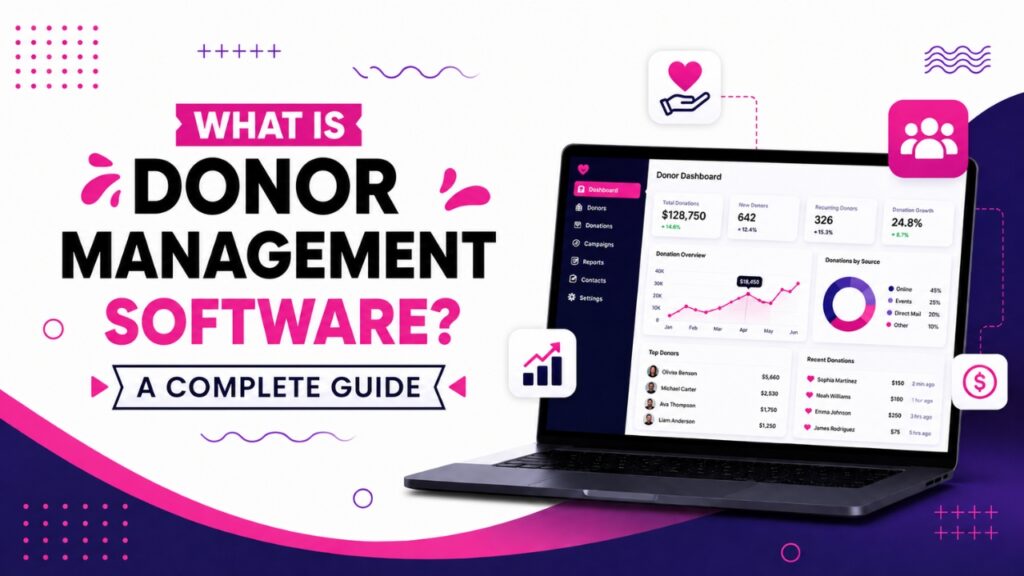
Short on time? Let AI do the work. Get the key points.
Nonprofits flourish when they have strong relationships with donors. But when fundraising campaigns grow and donor databases expand, managing donor data manually becomes increasingly difficult.
With the increase in the number of donors, spreadsheets become difficult for nonprofits to manage donor data, often donor follow-ups are overlooked, and crucial fundraising opportunities can get missed. This is where donor management software becomes essential.
While a modern donor management system helps nonprofit organizations to organize donor information, track their donation, automating communication with donors, manage fundraising campaigns, and improve donor retention from a single centralized system.
Instead of managing donor data across multiple disconnected platforms, nonprofits can use a strong nonprofit CRM to simplify fundraising operations and build stronger , more personalized relationships with donors.
Today’s donation management software goes beyond basic donor tracking. Advanced donor management software provides features like recurring donation management, donor segmentation, fundraising integration, and personalized donor engagement tools.
These features help nonprofit organizations to improve operational efficiency while creating more meaningful donor experiences.
As digital fundraising continues to evolve, many nonprofit organizations are increasingly adopting scalable and user-friendly platforms like SimplyGiv to streamline donor management and improve results of fundraising.
By combining donor tracking, campaign management, automating communication, and reporting in one system, SimplyGiv helps nonprofits to reduce administrative work and focus more on their missions.
In this complete blog, we will explore what donor management software is, how it works, its important features and advantages, and how nonprofits can choose the best solution to support sustainable fundraising growth.
Also Read: How to Track Donor Engagement for NonProfit and Churches
Donor management software is a centralized digital platform. This software helps nonprofits to maintain good relationships with donors by tracking fundraising efforts and organizing donor data.
Unlike before, instead of using spreadsheets, emails, or disconnected systems, nonprofits can now use a centralized management system to streamline their operations and also improve donor engagement.
Rather than depending on spreadsheets, emails, or disconnected systems, nonprofits can use a centralized donor management system to streamline their operations and also improve donor engagement.
A modern nonprofit CRM stores all donor data at one place that makes it easier for nonprofits to build stronger relationships with donors and improve fundraising performance.
These platforms are designed for nonprofits and fundraising teams, unlike traditional CRM software that is built for sales and customer management.
Also Read: What is a Donation Kiosk
Modern donation management software also includes advanced tools which help nonprofits to automate and optimize fundraising efforts.
Popular donor management platforms include:
Platforms like SimplyGiv enable nonprofits to streamline donor management, enhance donor retention, and create more personalized fundraising experiences by smartly automating processes and centralized donor data management.
Also Read: Why Church Needs a CRM? How to Get Started
Strong relationships with donors are essential for nonprofits to support their fundraising initiatives, sustain community programs, and drive long-term organizational success.
In early phases, most nonprofits manage donor records manually through spreadsheets or basic databases. Though in the early phase, when nonprofits have small donor lists, it quickly becomes difficult to manage donor records when fundraising activities increase.
As donor databases grow, manual systems often create several operational challenges which affect both efficiency and donor engagement.
But without having a centralized donation management software, it may be difficult for nonprofits to maintain personalized relationships with donors which can affect donor trust, fundraising performance, and long-term donor engagement.
Using a reliable fundraising CRM helps nonprofits to reduce their administrative workload which allows the teams of nonprofits to spend more time on their mission initiative rather than repetitive manual tasks.
Platforms like SimplyGiv help nonprofits to simplify donor management, streamline fundraising operations, and create donor experiences through automation, reporting, and centralized data management tools.
Also Read: Digital Church Grow Strategies
At its core, donor management software works as a centralized fundraising platform. It helps nonprofits to maintain relationships with donors, automate workflows, and organize fundraising data effectively.
Whenever a donor interacts with an organization, this software automatically capture the donor data and stores it in a unified profile. This gives nonprofits a complete understanding of the donor from the first interaction to long term engagement with donors.
When a supporter makes donations online, the system instantly records and updates crucial donor information. Such type of automation in donation details reduces manual work and ensures that donor data remain accurate and organized.
Here’s how a typical donor interaction works:
This process creates a smooth donor management system which allows nonprofits to track and maintain donor relationships more effectively. Modern CRM platforms can also be integrated with multiple nonprofit tools that help nonprofits to implement their operations smoothly and also improve visibility about donor data.
Common integrations include:
When nonprofits connect all fundraising activities into a single centralized platform, then nonprofits can get better visibility into donor engagement, campaign performance, and fundraising patterns.
Platforms like SimplyGiv simplify the complete donor management process as it combines donor management, online fundraising, automation, reporting, and communication tools into a centralized non profit management system. This will eventually help nonprofits to save time, improve donor experiences, and allow them to prioritize more on creating impact on donors rather than just managing administrative tasks.
Also Read: How to Run a Successful Donation Campaign
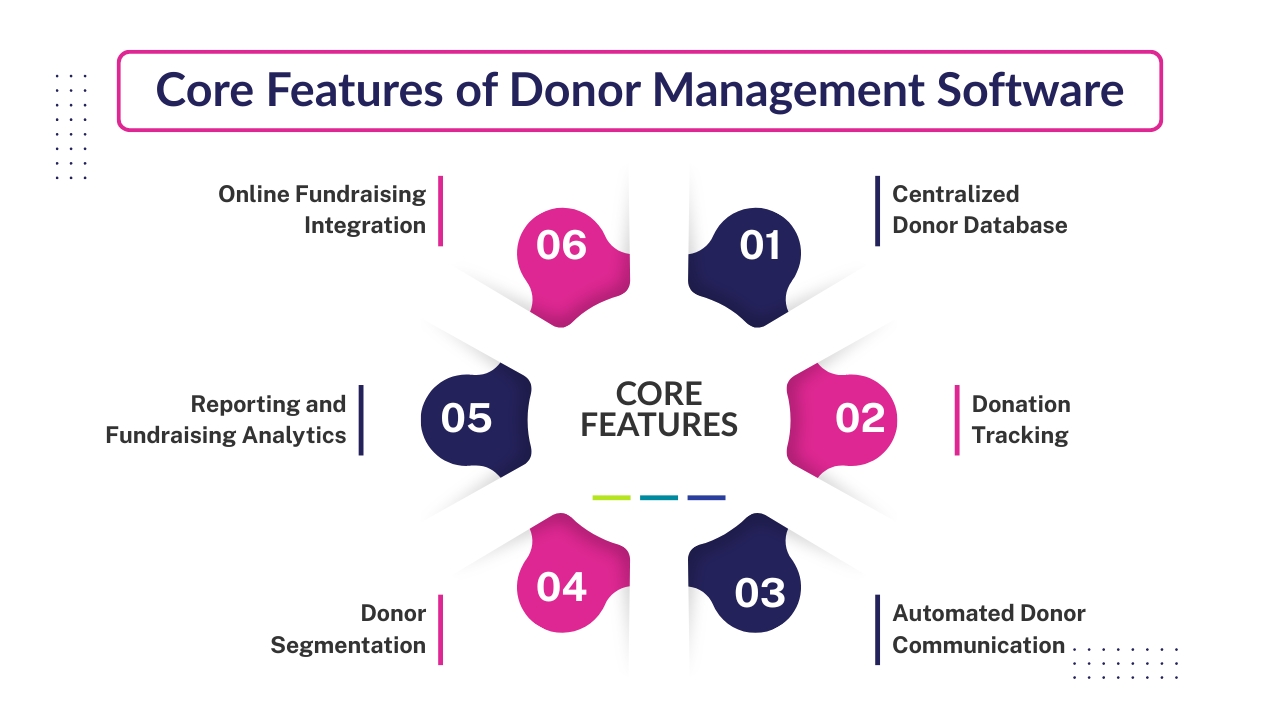
Core features of donor management software allow non-profit organizations to implement fundraising smoothly, improve relationships with donors, and manage data efficiently.
A modern donor management system has a centralized donor database, donation tracking, automated communication tools, and donor segmentation.
These systems also provide fundraising analytics, reporting dashboards, and online payment integrations. All these essential features work together to improve donor engagement, reduce manual workload, and improve customer retention.
The centralized donor database is the foundation of every effective donor management system. This database works as a single source of data where nonprofits can store, organize, and access all donor related information in one place.
Instead of managing spreadsheets, emails, and disconnected tools, centralized databases can enable nonprofits to gain a unified view of every donor which makes donor management more efficient and accurate.
Having a centralized donor database helps nonprofits to build stronger relationships by providing a complete understanding of each donor’s journey and their past engagement history.
When non-profits centralize all the donor data at one place, then non profits can easily get to know the complete profile about donors which supports personalized communication and targeted fundraising strategies.
A strong centralized database allows nonprofits to access complete donor insights in real time which ensures that they deliver personalized and relevant messages to donors that directly helps nonprofits to build stronger trust and sustainable fundraising growth.
Also Read: How to Increase Church Donations With Online Giving Tools
Donation tracking is one of the most crucial features of a modern donor management system which provides non-profits clear visibility about all the fundraising activities.
With a strong donor tracking software nonprofits can track every donation in real time, that ensures accurate financial records and also better decision making.
Having proper donation tracking in place, organizations can understand how the donations are coming in, know which donation campaigns perform best, and know how donor behavior changes over time.
Such insights help nonprofits to plan effective fundraising strategies and improve overall donor engagement.
When nonprofits organize this data, nonprofits gain a clearer picture of their fundraising ecosystem and financial health.
These insights enable nonprofits to refine their outreach strategies, personalize communication, and improve fundraising performance.
Overall, donation tracking improves transparency, strategic planning, and supports more sustainable long-term fundraising growth.
Also Read: Why Your Church Needs a Mobile Giving Solution
Automated donor communication is an important feature of modern donor management software that helps nonprofits to maintain strong and consistent relationships with donors.
For nonprofits effective communication with donors is essential for building donor trust and long-term engagement but managing communication can be time-consuming and also have errors.
A donor engagement platform streamlines communication with their donors by automating routine communication tasks while ensuring every donor receives personalized updates on a timely basis.
Automating communication with donors not just improves efficiency but also ensures that no interaction with donors is missed which improves overall fundraising outcomes.
When nonprofits automates these processes, nonprofits can maintain consistent communication with donors without increasing staff workload.
These regular communication with donors help them feel valued and also connected to the mission.
Overall, automated communication ensures that nonprofits build stronger, long-lasting relationships with donors while also focusing on their mission activities rather than repetitive admin tasks.
Also Read: 100 Best Thank You for Donation Quotes
Donor segmentation is a powerful feature of modern donor management software that helps nonprofits to understand and organize their donors effectively.
As every donor has different reasons and motivations behind making donations, different donation patterns, and engagement levels, segmenting donors allows organizations to group donors into different meaningful categories.
It makes communication and fundraising efforts of nonprofits more targeted, relevant, and impactful. Because it helps nonprofits to customize donation campaigns based on specific donor behavior rather than sending the same message to all supporters.
Organizing donors into different segments helps nonprofits to create more personalized and effective fundraising strategies.
Overall, donor segmentation helps nonprofits to not just generic messaging to all their supporters or donors. Rather to build data-driven relationships with donors by sending them personalized messages which improves long-term fundraising success.
Also Read: What is a Donation Kiosk
Reporting and fundraising analytics are essential features of modern donor management software because it lets nonprofit organizations make informed, data-driven decisions.
Being in a highly competitive fundraising landscape, it allows nonprofits to make informed, data-driven decisions.
In today’s highly competitive fundraising landscape, nonprofits cannot just use assumptions to deliver their campaigns effectively. A strong fundraising CRM provides insights in real time which helps organizations to know the performance of their campaigns, know donation patterns, and improve overall fundraising strategy.
When nonprofits have access to advanced dashboards and reporting tools, nonprofits can easily monitor essential donation metrics which helps to check the success of their donation campaigns.
Such insights help nonprofits to know the campaigns that are working well and know the areas that require improvement.
With real-time data, non-profits can refine their strategies, improve donor engagement, and achieve better sustainable fundraising growth. Overall analytics convert fundraising from guesswork into a strategic, measurable, and result driven process.
Also Read: Top Benefits of Using Donation Kiosk for NonProfits and Churches
Online fundraising integration is an important feature of modern donor management software which helps to make the donation process simple, fast, and smooth for supporters.
In today’s times donors expect smooth digital experiences, so it is essential for non profits to adapt to these expectations which will maximize fundraising success.
A strong nonprofit fundraising software connects multiple digital tools into a single unified system that ensures that every donation is captured, recorded, and tracked efficiently.
Such integration helps nonprofits to increase their reach and improve conversion rates by providing multiple payment options.
By connecting these tools, nonprofits can manage all fundraising activities from a single platform.
Overall online fundraising integration helps nonprofits to modernize their fundraising efforts, connect with more donors, and create a smooth, user-friendly giving experience that encourages long-term engagement with donors.
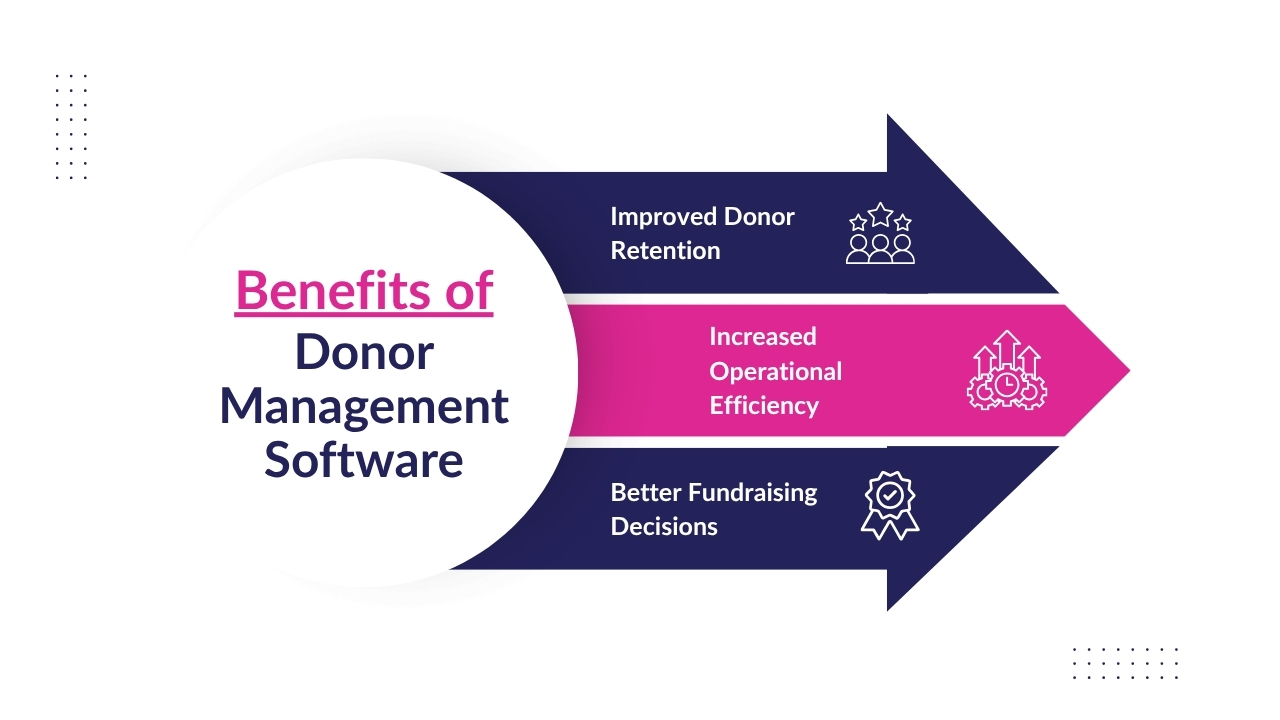
Donor management software helps nonprofits to improve retention of donors, streamline operations, and make data-driven fundraising decisions. It enables nonprofits to implement personalized communication with donors, automate their workflow, and also better donor tracking.
A strong fundraising CRM reduces manual work, increases efficiency, and also improves donor engagement that allows organizations to build stronger relationships with donors and achieve consistent fundraising growth effectively.
Improved donor retention is one of the biggest advantages of donor management software. Because for acquiring new donors, non profits require to invest more time, effort, and resources that makes this process more expensive than retaining existing supporters.
A strong fundraising CRM helps nonprofits build lasting relationships by keeping donors engaged and informed throughout their journey.
Donor management software improves retention through:
When donors feel genuinely connected to a mission and see the impact of their donations, then they are more likely to continue supporting the nonprofits over time.
Also Read: 10 Powerful Thanks Giving Sermons
Increased operational efficiency is another crucial advantage of donor management software that helps nonprofits to save time and resources by automating routine admin tasks.
A strong fundraising CRM reduces manual workload and improves overall productivity, which allows teams to focus more on impactful activities.
Automation reduces repetitive tasks such as
By reducing these time-consuming tasks, nonprofits can operate more effectively and accurately.
This allows staff to focus on
Overall, automating processes helps to improve efficiency, reduces errors, and helps organizations to maximize their impact.
Better fundraising decisions are a crucial advantage of using donor management software as it provides nonprofits with real-time data and actionable insights.
A strong fundraising CRM helps organizations to not just do guessing rather to make informed, strategic decisions which improve overall campaign performance and donor engagement.
A fundraising CRM helps nonprofits
Using accurate data and analytics, enables nonprofits to understand donor behavior more clearly and adjust strategies accordingly.
Organizations that depend on data-driven insights consistently usually perform better than those organizations that use manual tracking methods as they can respond faster, plan better, and maximize fundraising outcomes.
Modern nonprofits are increasingly choosing Simplygiv as it offers a simple, scalable, and donor-focused approach to fundraising.
As the expectations of donors keep increasing, organizations need tools which reduce complexity while improving efficiency and engagement.
Simplygiv addresses these requirements by combining all essential fundraising features into one single fundraising CRM removing the need for multiple disconnected systems.
By integrating all these features, Simplygiv helps non profit organizations to streamline operations, reduce manual workload, and improve donor relationships.
In today’s digital fundraising landscape for building strong relationships with donors requires nonprofits to go beyond spreadsheets and manual processes.
When nonprofits grow, managing donor data, tracking donations, personalizing messages, and tracking performance of fundraising campaigns with spreadsheets become more complex.
So this is why it is essential for non profits to invest in the right donor management software for ensuring long-term success of non-profit organizations.
Because with a modern donor management system nonprofits can centralize donor data, automate repetitive tasks, improve donor engagement, and also make data-driven fundraising decisions.
Whether donation tracking, donor segmentation, reporting dashboards, and online fundraising integrations, the right nonprofit CRM can improve operational efficiency and also helps them to retain their donors.
More importantly, donor management software allows nonprofit teams to spend less time handling admin work and more time focusing on their mission, community impact, and their relationships with donors.
As fundraising strategies continue evolving, nonprofits require scalable and user-friendly tools which easily adapt to changing donor expectations and digital fundraising patterns.
Platforms like SimplyGiv help nonprofits simplify fundraising operations by combining donor management, communication automation, online fundraising, and analytics into one connected platform.
This makes it easier for organizations to manage donor relationships, improve campaign performance, and create more personalized donor experiences.
Whether you are running a small nonprofit or a growing organization, selecting the right fundraising CRM helps to strengthen donor trust that increases fundraising efficiency and also supports sustainable long-term growth.
If you still have any query about donor management software then you may book a free demo at SimplyGiv and we are more than happy to assist you.