Church Events Management Best Practices (with Tools)
Church events play an important role in building a strong and connected faith community. Church events…
Read More →
Short on time? Let AI do the work. Get the key points.
In today’s digital world, churches strengthen relationships with their donors by using data insights which helps them to know about donors preferences, donation patterns. While still many churches struggle to keep their donors connected to their mission over time.
If you are willing to understand how to use data to improve donor retention in your church, it is essential for churches to learn about how to use these data insights and implement them into impactful church activities or campaigns.
Instead of simply guessing, churches can now use donor data, church analytics, and fundraising insights which helps them to understand the donation patterns, donor engagement and their preferences.
Donor retention is not about churches requesting donors for recurring donations. Instead it is about gaining trust and maintaining consistent communication with donors, and showing the impact which the donors make on other’s lives with their donations.
Using data-driven strategies, helps churches to identify the donors who are often donating, the donors who may be lapsing, and about the factors which encourage donors to donate regularly.
This helps churches for more personalized outreach, develop targeted campaigns, and build stronger long-term good relations with their supporters.
Tracking donation history, analyzing email engagement, even participation, using this data for church fundraising helps them to create a more effective and sustainable giving.
This helps churches to develop personalized experiences which make donors feel both valued and connected to the mission.
Through this blog, we will walk you through how to use data to improve donor retention in your church through practical steps, smart tools, and proven techniques.
Adopting a data-driven approach, helps churches to increase loyalty, increase recurring giving, and build a thriving, engaged community of supporters.
Also Read: Church Donation Kiosks
Before going deeper into data and analytics, it is crucial to know what exactly is donor retention for churches. Donor retention means how the churches keep their donors engaged and keep giving consistently with time.
Instead of just focusing only on the efforts to attract new donors, donor retention is also about building long-term relationships with their existing donors.
If the donor retention rate is high, it means donors engage deeply to the mission of the church, while if the donor retention rate is low, it may indicate that there are gaps in communication with donors, transparency, or donor experience.
Why Donor Retention Matters
Donor retention is an essential factor for sustaining churches for the long-term. Primarily for churches retaining existing donors is more cost-effective than acquiring new donors.
Loyal donors usually increase their donations over time when their trust and involvement with church activities increases. Ultimately when churches maintain strong relationships with donors, then the donors turn to advocates who share your mission and also encourage other donors to support your cause.
When donors prioritize donor retention, let churches build a stable and predictable source of funding. Such stability allows ministries, outreach programs, and community initiatives to expand and continue making a meaningful impact.
Also Read: How to Increase Church Donation With Online Giving Tools
Data plays an important role in retaining donors for churches. Because data insights help churches to not just simply guess about which donors will donate or not donate, rather it helps churches to know the real patterns of donors, donor behaviors, and donor preferences.
When donors have deeper data insights, churches can create personalized and impactful experiences for donors which keeps their donors more engaged to your mission and giving over time.
By analyzing donor data, churches can identify patterns like when the donors are most likely to donate, donation campaigns which perform well, and the factors which encourage them to donate consistently.
Such insights help churches to refine the way they communicate with their donors, improve their outreach efforts, and build stronger relationships with their donors.
Types of Data to Collect
For effectively using donor data, it is essential for churches to focus on crucial information such as donation history that includes donation amount, frequency of giving, and payment method.
Donor demographics like donor age, location, and interests can give valuable insights about them. Donor engagement details such as event attendance, email open rates, and volunteer participation which reveals how involved are your donors.
Understanding the communication preferences of donors helps churches to reach their donors through the right channels.
When you have the right data, help churches to segment donors, personalize donor messaging, and develop targeted strategies which increase donor retention and also strengthen their long-term support.
Also Read: How to Setup Multiple Funds And Split Giving Online
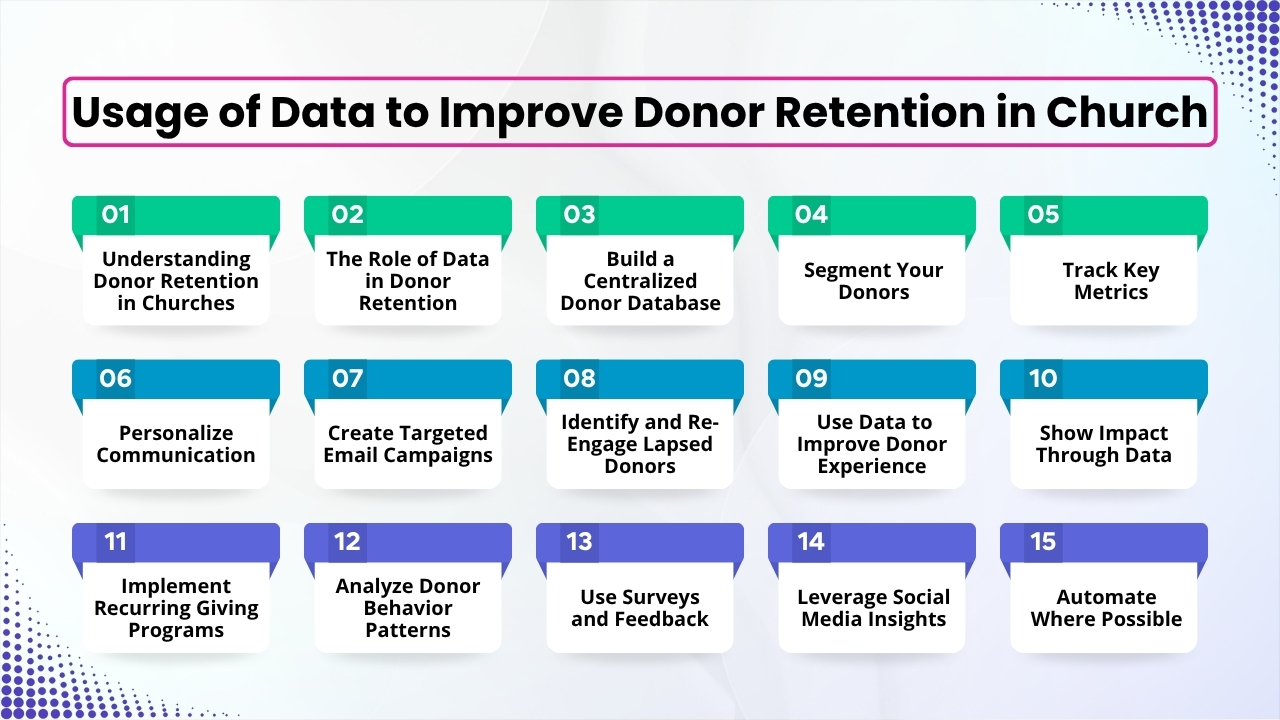
A centralized donor database helps churches for donor retention by using donor data. Without having a centralized database, donor data may be scattered at different places, outdated, or even difficult for churches to access.
When the donor data is centralized at one place, it helps churches to maintain donor data accurately, improve communication with donors, and make smarter decisions that improve relationships with donors in the long-term.
What It Should Include
An effective database stores donor profiles in detail which includes personal donor data and giving history. It includes contact details such as email, phone number, and address, along with interactions like event participation, volunteer activity, and past communications.
Such complete information about your donors helps your churches to understand each donor’s journey and their level of engagement with churches.
Tools to Consider
For managing your database effectively, use church management software(ChMS), CRM systems, or donation platforms which provide built-in analytics.
Such tools let churches to easily organize your data and provide insights which guide their outreach efforts.
Having a donor data centralized at one place ensures that the same data is shared across every team, reduces chances of errors, and offers quick access to important details which allows churches to personalize their communication and increase donor retention over time.
Also Read: How to Track Donor Engagement for Nonprofits and Churches
Every donor is not the same, so considering every donor as one group may reduce the effectiveness of your communication with donors.
Donor segmentation helps churches to segment their donors into impactful groups on the basis of donor behavior, giving patterns, and their level of engagement with donors.
Such an approach helps donors to offer relevant and personalized messages which each donor can relate to.
Common Segments
You may segment donors into different categories such as first-time donors, recurring donors, major donors, lapsed donors, and event-based donors. Each group of donors interact with donors differently and may require a personalized approach to maintain both donor interest and support.
Why Segmentation Works
Segmenting donors helps churches to improve communication with their donors because it ensures that the right message reaches the right donors.
For instance, sending warm welcome messages and onboarding messages to first-time donors by making them feel appreciated and also connected to your church mission.
For lapsed donors, churches have to implement re-engagement efforts that bring these donors back to your mission, while major donors expect personalized updates and gain insights about the impacts that they make with their donations.
When churches understand the different efforts that they need to make for different segments of groups, churches can develop targeted strategies which strengthen relationships with donors, build donor trust, and encourage donors for consistent giving.
When donors are effectively segmented, then it leads to higher donor retention and creates a more engaged, supportive community.
Also Read: Top Online Fundraising ideas to Grow Donation Fasts
For improving donor retention effectively, churches must go beyond assumptions, and begin tracking performance through crucial metrics.
Tracking the right metrics helps donors to understand their donor behavior, identify concerns, and make informed decisions that strengthen donor engagement in the long-term.
Important Metrics
Begin by tracking crucial metrics such as donor retention rate which reveals the percentage of donors who continue giving over time. Donor lifetime value helps churches to understand donations which a donor contributes throughout their relationship with your church.
Other crucial metrics are average gift size, donation frequency, and church rate, that reveals the count of donors who stop giving.
Example
For instance, if your donor retention rate is 40%, then it means that 60% of your donors may not be returning after their first donation. It indicates that there is more opportunity for churches to improve communication with donors, engagement, and follow-up strategies.
By regularly reviewing key metrics helps churches to identify trends, address challenges early, and refine your approach. Consistently tracking performance, helps churches to measure progress, optimize your efforts, and develop an effective system that encourages donors to remain connected and keep supporting your mission.
Also Read: Church Event Management Best Practices With Tools
Delivering personalized messages is one of the effective ways to strengthen donor relationships and increase donor retention in your church. When donors feel that they are recognized and valued as individuals, then they may remain engaged in your mission and continue giving over time.
Donors may not feel connected to generic messages, but customized messages help churches to create a deeper emotional connection.
How Data Helps
Using donor data helps churches to create donor messages that feel both relevant and impactful. It includes addressing donors by their name, references about their past donations, and sharing updates about the causes which donors care the most.
Personalized messages to donors reveal that you notice and appreciate each donor’s involvement with the mission.
Example
Instead of sending a generic message like, “Thank you for your donation,” you can say, “Thank you, John, for your generous contribution toward our youth program last month.” Such a small change in messages sent to donors makes these messages more specific and impactful.
Personalized messages help churches to build trust and loyalty because such messages make donors feel both valued and appreciated. With time, personalized messages help churches to build strong relationships with donors that encourage them to repeat giving.
Also Read: Why Church Needs CRM & How to Get Started
Email is one of the most effective and reliable communication channels which churches use that helps them to create donor relationships.
But, just sending the same message to everyone may reduce the engagement levels among every donor. Using donor data helps churches to create targeted email campaigns, through which churches can offer more relevant and impactful communication that encourages consistent support.
Use Data to
Churches may use donor data to send personalized messages to certain segments of your audience. You may share stories, updates, and opportunities which align the interests of donors and their past involvement of donors with churches.
You may also use email to notify supporters about upcoming events, special initiatives, or urgent requirements that ensures your communication remains timely and impactful.
Campaign Ideas
Churches must consider drafting a welcome email list for new donors to introduce them to your mission and develop a connection with donors early. Ensure that you send monthly impact updates that show how their donations are changing or impacting other’s lives.
For inactive donors, churches may use re-engagement emails which remind them of their past donation and invite donors to reconnect. Such an approach increases open rates, builds stronger relationships, and improves donor retention.
Lapsed donors are donors who had previously supported your church before but have stopped giving over time. Reconnecting with lapsed donors is an important opportunity for churches because these donors are already familiar with your mission and may simply require a reminder or motivation to get involved again.
How to Identify Them
Use your donor database to track giving activity and identify those who have not contributed within specific time frames, such as 3 months, 6 months, or even 1 year.
Segmenting these donors based on the duration that these donors have been inactive helps to create more targeted re-engagement strategies.
Re-Engagement Strategies
Start by sending personalized messages to lapsed donors that acknowledge their past support and also express genuine appreciation. Sharing impactful stories helps to show how their donations are making an impact on other’s lives.
You can also encourage them to events, services, or special initiatives to help them reconnect with your church community.
Example
A simple message like, “We’ve missed you! Here’s how your past support made a difference,” can be powerful and welcoming.
Re-engaging lapsed donors is often more effective and cost-efficient than finding new ones, making it an essential part of improving donor retention.
Also Read: 100 Best Thank You for Donation Quotes
Donor experience plays an important role in donor retention. Because even small donor frustrations may discourage people from donating again. By using data effectively, your church may identify the challenges in the donation process and make improvements that create a smooth, enjoyable experience for supporters.
Improve Donor Experience By
Improve donor experience by simplifying the donation process which makes it quick and easy for donors to complete. Offer them different giving options such as online payments, mobile giving, and recurring donations as per different donor preferences.
Reducing unwanted steps in online forms can also prevent donors from abandoning the giving process in between.
Analyze
Data can reveal the areas where donors face challenges. Track donor drop-off rates on your donation pages to see where users leave before completing a donation.
Identify preferred payment methods to ensure that you are offering them the most convenient giving options.
Additionally, analyze whether donors are using mobile devices or desktops, and optimize your platform accordingly.
By continuously refining the donor experience based on data insights, your church can reduce friction, increase customer satisfaction, and encourage more consistent giving, ultimately improving donor retention over time.
Donors are required to feel confident that their donations will make an impact on other’s lives. Churches cannot simply ask donors for donations because people are more likely to keep giving when they see the impact of their donations.
This is why data becomes a powerful tool for building trust and strengthening long-term relationships.
Use Data to
Use your donation data to share measurable outcomes and impactful results. Show donors how their funds have been used, highlight achievements, and connect those outcomes to donor contributions.
You may also share success stories with a real time donation amount that makes your message more impactful. It is essential for donors to be transparent about where their donation goes, they feel more secure and valued to make donations.
Example
A statement like, “Your donations helped feed 300 families this month,” provides a clear and tangible outcome that donors can relate to and feel proud of.
By consistently reporting about the impact that donors make with their donations not just increases trust but also encourages donors to remain engaged in the mission.
When donors see the positive impact which they are making with donations, then donors may keep continuing donations and donors may also become long-term advocates for your church’s mission.
Recurring giving programs are one of the effective ways for strengthening donor retention which ensures long-term stability for churches. Donors who commit to donate regularly are more engaged and connected to your mission, and there are high chances that donors may continue supporting your giving initiatives over time.
Benefits
Recurring donations offer predictable income that helps churches to plan ministries and outreach programs effectively. Such donors may have a higher lifetime value because consistent donations increase donation amounts over time.
Additionally, regular donation develops a deeper feeling of commitment that converts occasional donors into dedicated donors in your mission.
Use Data to
Use donor data to identify the donors that have regularly donated in the past or have stronger engagement. Such donors are ideal donors for recurring programs.
Churches can send these targeted invitations that encourage donors to join a monthly or scheduling giving plan.
Example
A simple and effective message could be, “Join our monthly giving program and make a lasting impact.”
Encouraging recurring donations, helps churches to build stronger relationships with donors, improve financial stability, and increase long-term donor retention in an impactful way.
Also Read: 10 Powerful Thanks Giving Sermons
Understanding donor behavior is crucial for improving customer retention and for making smarter fundraising decisions. Analyzing donor behavior patterns about how and when people donate, helps churches to gain insights that help to better connect with supporters and refine your overall donor retention strategies.
Look For
Start by identifying important trends in donor activities. Ensure that you watch closely about the timeframes when donors are more likely to donate like specific seasons, holidays, or special campaigns.
Also analyze the donor’s preferred donation amount to know what donation amount feels comfortable for your donor to give. Additionally reviewing the way donors respond to different campaigns that includes messages, channels, or appeals which generate the most engagement with donors.
Use Insights To
Once you have insights about the behavioral patterns of donors then you may optimize your efforts. Ensure that you schedule your donation campaigns during busy donation periods for maximum results.
Adjust your messaging based on what donors can relate to the most , and refine your targeting which helps to reach the right donors with the right message at the right time.
Consistently analyzing donor behavior patterns, helps churches to make data-driven decisions that improve donor engagement, increase total donation collections, and build stronger, long-lasting relationships with donors.
Data is not limited to numbers and analytics rather it also includes the thoughts, opinions, and experiences of your donors. Gathering donor feedback directly from your supporters helps your church understand their motivations to donate, expectation from their donations, and overall experience in a deeper and more impactful way.
Collect Feedback Through
Churches may gather donor insights through tools such as surveys, interviews, or online feedback forms. These tools help donors to share their perspectives openly and give input which may not be visible only through data.
Customer feedback provides a human perspective which complements your data. Though donation amounts may reveal the donation amounts, the donor feedback explains why the donors are donating.
Combining both donation amounts and donor feedback helps churches to make informed decisions that improve their relationships with donors, and build an engaging and supportive environment that encourages long-term giving.
Social media platforms are not just communication tools that are powerful sources of data that help your church to understand and engage with their donors well.
Analyzing social media insights helps churches to reveal patterns that help to build stronger relationships with donors and improve donor retention strategies.
Track
It is essential for churches to track crucial metrics such as engagement rates that include likes, shares, and comments. Such interactions reveal how donors respond to different types of content.
Additionally, reviewing donor demographics helps churches to know about the donors that engage with your posts, including age groups, locations, and interests.
Use This Data To
Use such donor insights to refine your content strategy by focusing on posts that generate the most engagement. Identify important topics or messages that your donors can relate to and create more around those topics.
You can also use this data to improve your outreach, ensuring that your messages reach the right people on the right platforms.
Social media insights provide valuable content that complements your donor data. By combining both churches may create more engaging, relevant, and effective communication that strengthens connections and supports long-term donor retention.
Automating processes helps churches to save time which reduces manual effort and also maintain consistent communication with donors.
When churches automate repetitive tasks helps teams to focus more on building impactful relationships with donors than handling regular processes.
Automate
Start by automating thank-you emails, donation receipts, and follow-up messages. When donations are immediately acknowledged after a donation, donors feel both appreciated and valued.
When donors are automatically sent notifications about updates, events, or future opportunities to donate.
Benefits
Automating processes has many advantages. It ensures faster communication because donors receive timely responses without delays. It also reduces the workload for your team which allows churches to dedicate more time to strategic initiatives and personal engagement.
Most importantly, it also improves the overall donor experience by developing a smooth and professional interactive experience every time.
Though automation handles routine communication with donors, it should also feel personal and impactful.
When used effectively, it helps to build a strong foundation for consistent engagement that allows churches to nurture relationships, improve donor retention, and focus on the strategies that truly matter, connecting with your community and advancing your mission.
Improving donor retention in your church is not just about increasing donations rather it is about building impactful and lasting relationships with the donors who believe in your mission.
Churches by learning how to use data to improve donor retention in your church, churches may simply move from guessing to a strategic approach which increases donor trust and engagement.
Through this blog, we will walk you through how donor data, church analytics, and data-driven strategies transform the way churches connect with their donors.
By understanding donor behavior, segmenting your audience, personalizing communication, tracking key metrics, each step helps churches to create a more relevant and impactful experience for your donors.
When churches use donor data effectively, they may identify opportunities, address challenges early, and offer a smooth and engaging donation journey.
Most importantly, it can clearly demonstrate the impact that shows donors how their donations are making a difference in other’s lives.
But remember, donor retention is not just a one-time effort rather it is an ongoing process of listening, understanding, and improving. By consistently using data helps to guide your decisions through which churches can develop deeper connections, encourage recurring giving, and build a community of supporters.
Ultimately, a thoughtful, data-driven approach not just ensures consistent financial support but also a stronger more connected church community which continuously grows and serves with purpose.
If you still have any query about how to use data to improve donor retention in your Church then you may book a free demo at Simplygiv and we are more than happy to assist you.