
10 Powerful Thanksgiving Sermons Every Pastor Can Preach This Year
Whenever Thanksgiving is near, pastors prepare themselves to walk alongside their congregations through a special season…
Read More →
Short on time? Let AI do the work. Get the key points.
Starting a charitable organization is an effective way to make an impact in the community. Whether your mission is to improve education, healthcare, environmental conservation, animal welfare, or social services, knowing How to Start a Non Profit is the initial step for building a non-profit organization successfully.
This complete guide will help aspiring founders to navigate through every step from launching and growing a sustainable nonprofit organization.
From defining your nonprofit mission, creating a nonprofit business plan, completing nonprofit registration, forming a board of directors, and obtaining a tax-exempt status, every step plays an important role in your nonprofit’s success.
Through this blog you will learn about how to develop an effective fundraising strategy, attract online donations, recruit dedicated volunteers, apply for nonprofit grants, build meaningful donor engagement, and ensure financial management and legal compliance.
In today’s digital fundraising market, using the right technology can highly improve your fundraising results and efficiency in operations.
Platforms like SimplyGiv help nonprofits to simplify fundraising by offering secure donation pages, recurring giving options, campaign management tools, and donor management features that make it easier to connect with supporters and increase impact of charity.
As a founder if you are launching your first charity or growing an existing charity initiative then this blog will offer practical advice and proven strategies that help your nonprofits to succeed.
By following the steps provided in this blog, founders will gain the trust and knowledge they require to establish a trusted nonprofit organization, increase community support, and create meaningful, long-term change through fundraising platforms like SimplyGiv.
Also Read: Not for Profit vs Non Profit guide
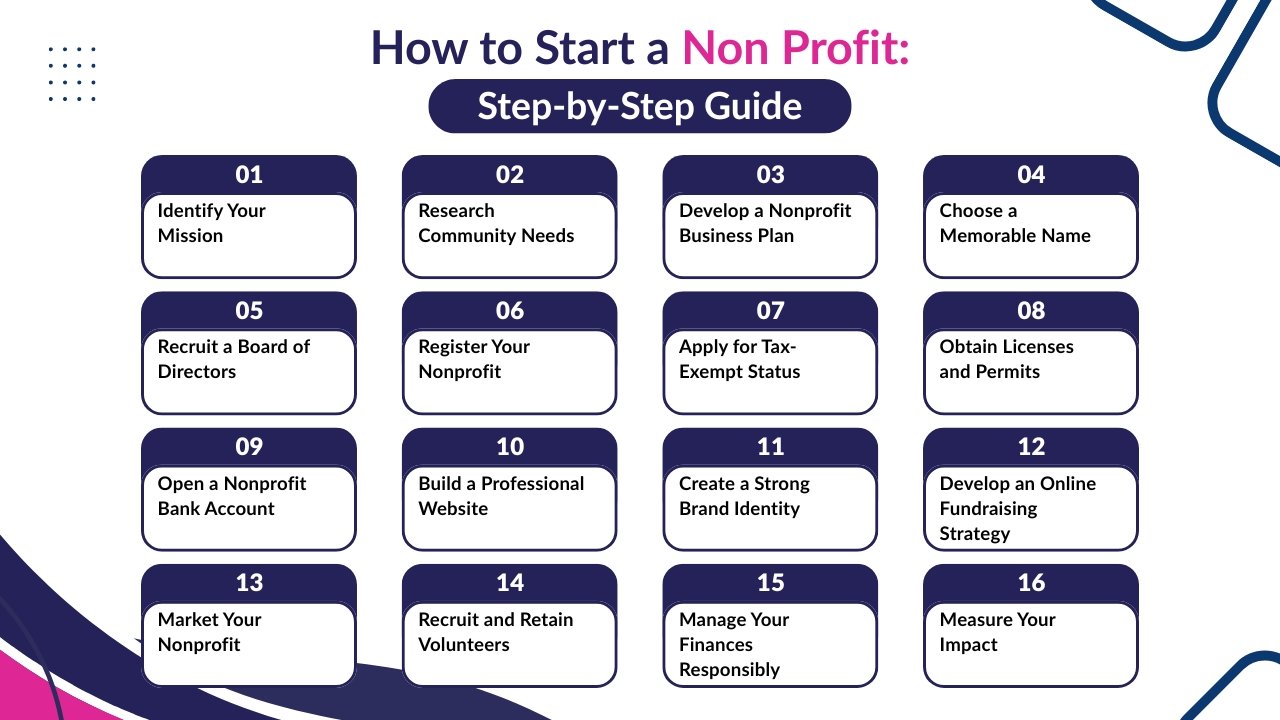
While launching a nonprofit organization, it is essential for founders to do careful planning and have a clear vision. By following a structured approach, they can build a nonprofit with a strong foundation, meet legal requirements, and create a long-term impact in the society.
Before launching a nonprofit organization, founders must have a clear mission. Your mission should reflect the core reason of existence of your nonprofit organization, about the community that they will serve, and the way your nonprofit will have a positive impact in the society.
Nonprofits with a clear mission can attract supporters, receive more funds, and keep your team focused on achieving fundraising goals.
Before writing your mission statement, ask yourself:
Your mission statement should be clear, encouraging, and easy to understand for your supporters. A mission statement must clearly convey the purpose and long-term vision of your nonprofit organization.
Example Mission Statement:
“Our mission is to provide quality educational resources and mentorship opportunities to underserved students, helping them achieve academic success and build brighter futures.”
A strong mission works as the foundation for your nonprofit that guides them for future planning, fundraising, partnerships, and community engagement.
The first initial step for founders while launching a nonprofit organization is to research about the community needs that they want to serve. When founders do thorough research about community needs, it helps them to avoid duplicating existing nonprofit services, and develop programs that create meaningful impact in the society.
Because knowing the target audience and local challenges helps founders to make informed decisions and ensure that their organization addresses challenges faced by the community which are often not taken care of.
Research your community to identify:
It is essential for nonprofits to conduct surveys, analyze local data, and consult local leaders or government officials to collect reliable information.
With this research nonprofits can provide unique, effective solutions, maximize existing resources, and create sustainable programs that provide long-term benefits to the community.
Also Read: Donor Management Software Guide: Everything Nonprofits Need to Know
It is essential for nonprofits to have a well structured business plan. Although the main purpose of nonprofit organizations is to create a social impact instead of generating profits, they must have a detailed plan that offers a clear direction for achieving their mission and ensuring long-term sustainability.
Nonprofits that have a detailed business plan indicate professionalism and credibility while they apply for grants, attract donors, or while forming partnerships.
Your nonprofit business plan should include the following key elements:
Nonprofits must have a memorable name, so founders must choose the right name for their nonprofit organization to establish the organization successfully.
The name of the nonprofit organization should show their mission, must be easy for their supporters to remember, and build a positive impression.
When a nonprofit has a strong and recognizable name, it helps them to establish their organization well, build trust among donors and volunteers, and enables supporters to easily find their nonprofits online and within the community.
When selecting a name, keep these best practices in mind:
When nonprofits have a memorable nonprofit organization name, it helps founders to establish a strong nonprofit identity. With a clear mission, community research, and a strategic plan, helps nonprofits to do registration successfully, fundraising, and long-term growth.
Also Read: Silent Auction Rules Every Nonprofit Should Know
They must recruit a strong board of directors that help nonprofits to achieve success and long-term sustainability of nonprofit organizations.
Board members look after financial performance, provide strategic leadership, and ensure nonprofits are legally compliant, and help nonprofits to stay focused on their mission.
When nonprofits hire board members, they must search for individuals who are experts in finance, law, marketing, fundraising, and education, and have various backgrounds.
With a well-balanced board nonprofits gain insights through which they can improve decisions.
The primary responsibilities of a board of directors include:
With experience and strong board members, nonprofits can improve their credibility among supporters, attract sponsorships, and build long-term partnerships.
After having a clear mission, business plan, and having recruited a board of directors, the next step is to legally register your nonprofit organizations.
Though registration requirements are different by country and state, registration of nonprofits provides your organization with legal recognition, increases credibility, and protects board members from personal liability.
When nonprofits are properly registered, it enables them to operate legally and apply for grants and different funding opportunities.
Before beginning the registration process, make sure you complete the following steps:
By keeping the documents organized, nonprofits can make the registration process smooth, and build a legal foundation for your nonprofit organization.
Also Read: How to Run a Silent Auction: Complete Guide for Nonprofits
Nonprofits must also apply for tax-exempt status while establishing nonprofit organizations. Once nonprofits are approved for tax-exempt status, then it enables them to allow more funds to be used for community services and charity programs.
When nonprofits gain tax-exempt status, it also builds credibility and encourages more individuals and businesses to donate, as supporters often can receive tax benefits on the basis of local laws and regulations.
The key benefits of obtaining tax-exempt status include:
Tax regulations being different in each country and state, nonprofits must consult the right government authority or legal professional for ensuring that application for tax-exempt status is accurate and meets legal requirements.
Before starting operations, nonprofits must obtain an essential license and permit required by local, state, or national authorities. Requirements include activities of the organization, its location, and the services that they plan to offer to the community.
When nonprofits secure the necessary approvals, then they can operate legally, avoid penalties, and build trust among donors, volunteers, and the community.
Your nonprofit may need the following licenses and permits:
Nonprofits must know about all legal requirements early and also keep their licenses up to date. When nonprofits remain compliant, it helps them to operate smoothly, protect their reputation, and helps them to focus on achieving their mission without needing any unnecessary legal complications.
Also Read: 20 Creative Fundraising Virtual Event Ideas for Nonprofits
They must open a dedicated nonprofit bank account for maintaining financial transparency, accountability, and accurate record-keeping among supporters.
Nonprofits must keep organization’s finances separate from personal accounts because it helps to build trust among donors, grant providers, and regulatory authority.
It helps nonprofits to make financial management simple because it ensures that all income and expenses are properly documented.
A nonprofit bank account offers several important benefits:
For opening a bank account for nonprofits, banks will ask for incorporation documents, tax identification number, board resolution authorizing the account, and identification for authorized signatories.
They must select a bank that provides services efficiently for nonprofits, online banking, and low transaction fees to reduce operational expenses.
Nonprofit must have a professional website because it works as an online foundation for your nonprofit. Nonprofits through a website can connect with donors, volunteers, beneficiaries, and community partners effectively.
Through this website nonprofits can show their mission, show the impact that their initiatives will have on the society, and let visitors easily know about their organization and support their cause. It also increases credibility of nonprofits and encourages more engagement from donors.
Your nonprofit website should include the following essential pages:
Nonprofits must have a professional website that helps them to build trust, attract supporters, and increase donations, while making the online presence of your nonprofit organization stronger.
Also Read: How to Track Event Attendance for Nonprofit Fundraisers and Community Events
Nonprofits must create a strong brand identity that helps them create a unique identity, build supporter trust, and establish long-term connections with donors, volunteers, and community partners.
Branding is not about designing a logo, rather it should show your organization’s mission, values, and the impact that they are willing to create.
Nonprofits must create a consistent and recognizable brand that makes nonprofits more recognizable for nonprofits and encourages supporters for long-term support.
Your nonprofit’s brand identity should include the following elements:
When nonprofits build a strong brand identity increases credibility of your nonprofit, increases donor trust, and helps nonprofits to attract new volunteers, partners, and funding while building a long-term reputation within the community.
They must develop a well-planned online fundraising strategy that helps them to achieve long-term success. Although nonprofits raise funds through traditional fundraising, online fundraising helps nonprofits to reach a wider audience, engage supporters, and collect donations instantly and securely.
When nonprofits have different fundraising efforts, then they can reduce financial risks and create a stable source of income for their nonprofit’s programs and operations.
Your online fundraising strategy should include:
When nonprofits have a diverse fundraising strategy, it helps to strengthen financial sustainability and supports long-term growth of your nonprofits.
Also Read: 25 Online Fundraising Ideas for Nonprofits to Raise More Donations
Marketing of nonprofits is essential to increase awareness of their mission, to attract donors, volunteers, and community partners.
With a well-planned marketing strategy, nonprofits can easily convey their mission, build credibility among supporters, and encourage supporters to provide long-term support to the mission.
Using multiple digital marketing channels, nonprofits can reach a wider audience and increase engagement within the community.
An effective nonprofit marketing strategy should include:
When nonprofits have a strong marketing strategy, they can increase their visibility, gain supporter trust, and support sustainable nonprofit growth.
In nonprofit organizations, volunteers play an important role in achieving success by giving their time, skills, and dedication to support their mission.
Nonprofits must recruit passionate individuals and provide them with a positive experience that helps to improve their programs while reducing operational expenses.
Implementing a thoughtful volunteer management strategy also encourages them towards long-term commitment and community involvement.
To recruit and retain volunteers effectively:
When nonprofits show appreciation and create a supportive environment for supporters, it lets volunteers feel valued, increases supporter retention, and encourages them to become long-term advocates for your nonprofit organization.
Managing your nonprofit’s finances responsibly is essential for maintaining transparency, building donor trust, and ensuring long-term sustainability.
Accurate financial management helps your organization to allocate resources effectively, meet compliance requirements, and make informed decisions. Regular tracking of income and expenses helps businesses to improve accountability and supports future growth.
Follow these financial management best practices:
Strong financial practices help ensure your nonprofit remains sustainable and credible.
Also Read: 50 Short Thank You Messages for Donations
Measuring your nonprofit’s impact is essential for demonstrating accountability and showing donors, volunteers, and stakeholders how their support creates impactful change.
Tracking results helps to evaluate the effectiveness of your programs, identify areas for improvement, and build credibility with current and potential supporters. Sharing measurable outcomes also strengthens donor trust and encourages them for continued contributions.
To effectively measure and communicate your impact, track key performance indicators such as:
Nonprofits must publish annual impact reports featuring real success stories, statistics, photographs, and testimonials to showcase your achievements, encourage supporters, and demonstrate your nonprofit’s long-term value to the community.
Starting a nonprofit organization is an impactful journey that needs careful planning, dedication, and a commitment to make a positive impact on society.
Whether defining a clear mission, registering your organization, building a strong leadership team, developing fundraising strategies, and maintaining financial transparency, every step helps them to create a sustainable and successful nonprofit organization.
Equally important is to engage their volunteers, measure their impact, and convey their achievements to build trust with donors and the communities that they serve.
When their nonprofit organization grows, they must use digital fundraising solutions that help them to reach more supporters and simplify the donation management system.
Platforms like SimplyGiv make it easier to create secure online donation pages, manage fundraising campaigns, encourage recurring giving, and strengthen donor relationships, allowing your team to focus on delivering meaningful programs.
By following this complete guide and adopting best practices, you’ll be well prepared to establish a thriving nonprofit organization that creates lasting social impact, attracts long-term supporters, and makes a meaningful difference in the lives of those you serve.
If you still have any query about how to start a nonprofit then you may Schedule a Call at SimplyGiv and we are more than happy to assist you.