
50 Short Thank You Messages for Donations (Perfect for Churches & Nonprofits)
For churches and nonprofits, giving is an act of trust, every contribution whether large or small…
Read More →
Short on time? Let AI do the work. Get the key points.
Growing a church is a goal of many pastors and ministry leaders, but church growth should never come at the cost of losing your mission. In today’s quickly changing world, churches can easily focus on increasing attendance, expanding programs, and improving visibility.
However, growing a church fast without having clarity can often cause less engagement and a loss of identity. The challenge is to achieve rapid church growth while staying deeply connected in your mission, values, and spiritual foundation.
A strong church understands that mission-driven growth is not just numbers alone. When the purpose of your church is clear, every strategy like digital outreach and community engagement, leadership development, and discipleship works together to create an impactful and sustainable impact.
Without clarity, even successful growth of the church can feel disconnected which makes both leaders and members uncertain about the church’s direction.
Today churches have more tools such as SimplyGiv to grow their reach. Whether online church platforms and social media ministry, in-person gatherings, and small group systems, churches have many opportunities for church marketing and outreach.
The real growth of church happens from choosing strategies which reflect your identity and support your long-term vision. At its centre, healthy church growth is all about transformation and not just member attendance for events.
It involves building authentic relationships, strengthening faith, and creating a sense of belonging within the community.
Through this blog we will walk you through strategies to achieve fast church growth while protecting your mission and ensuring that your church not just grows bigger but also grows stronger, deeper, and more impactful.
Also Read: Digital Growth Strategies
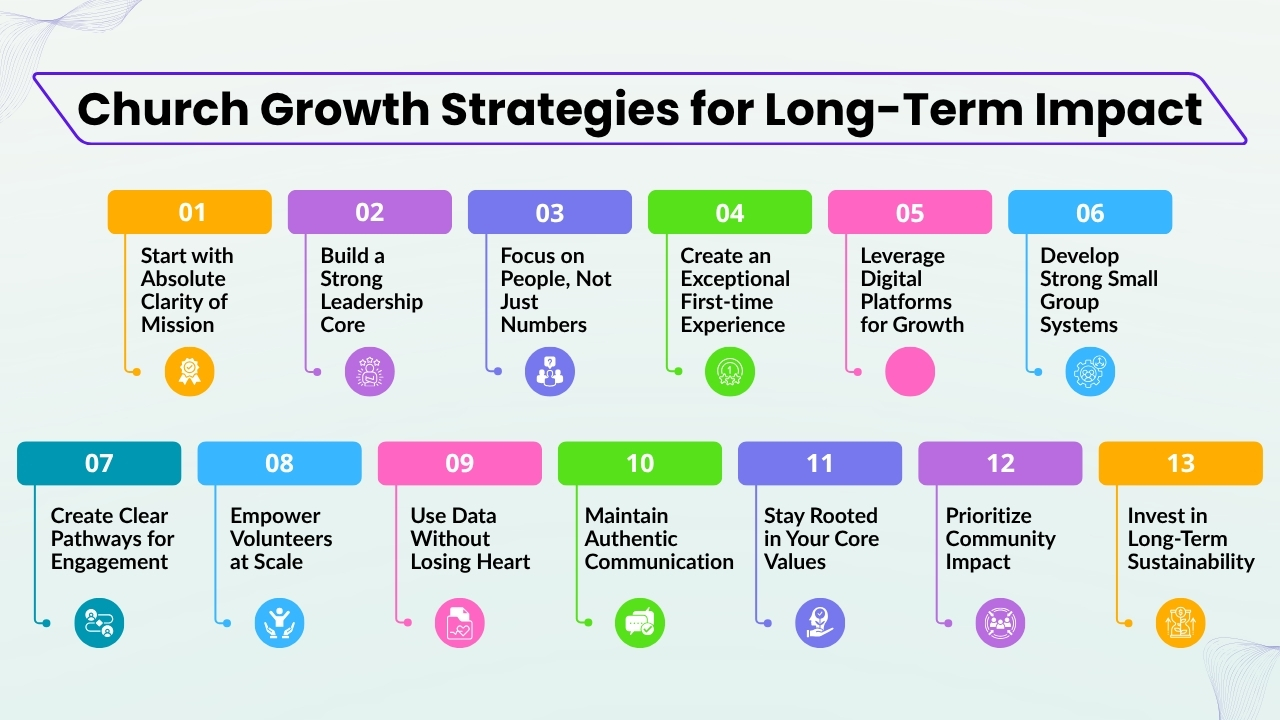
Prior to focusing on growth strategies, it is essential for churches to define what your church’s mission is. A strong mission provides direction and purpose, which ensures that every step you take aligns with your core values.
Without having clarity, growth may become random that causes confusion instead of meaningful impact. When the mission is clear, it becomes easier to make consistent and impactful decisions that support long-term success.
Growth should reinforce and expand your mission, ensuring it becomes stronger and more impactful and not weakened.
Also Read: How to Use Data to Improve Donor Retention in Your Church
Fast church growth without strong leadership often causes confusion, inconsistency. No matter even if your vision is encouraging, one pastor or leader cannot manage a growing church alone.
Healthy growth of the church requires a strong leadership which supports the mission, guides people effectively, and maintains stability as the church expands. A strong leadership is what turns vision into action and helps growth remain organized.
A strong leadership structure creates stability, protects the mission, and makes church growth more sustainable over time.
Also Read: How to Run a Successful Donation Campaign
Churches may easily get focused on member attendance, growth charts, and weekly statistics especially when churches are trying to grow quickly. Though numbers may be helpful for tracking progress, good numbers never become the definition of success.
Real church growth is not just about the count of people attending services but also about the number of lives changed, strengthened, and connected through your ministry. When churches only focus on the number of visitors, then the core purpose of the church can slowly get lost.
Always remember that people are not just numbers on a report, rather they are the true mission of the church.
Also Read: Digital Church Growth Strategies
Any visitor’s first experience with your church matters because it influences whether they decide to return. Before people connect with the church’s message, members often respond to how they feel in the environment.
First-time guests notice the church atmosphere, the friendliness of the people. And if visitors feel that their first experience is warm, organized, and welcoming, there are high chances that they may come back and explore deeper involvement.
Visitors should never feel any confusion and help guests feel relaxed from the moment they arrive. Even small efforts that churches make often have a big impact on how welcome someone feels.
The experience should remove any confusion and help guests feel relaxed from the moment they arrive. Small details often make a big impact in how welcome someone feels.
A strong first-time experience goes beyond impressing visitors. It helps turn first-time guests into regular attendees and future members of your church community.
Also Read: Top Benefits of Using Donation Kiosks for Nonprofits and Charities
In today’s highly connected world, your church exists in physical and digital spaces. For many people, the first interaction which they have with your church will happen online and not in person.
Before visiting your church service, people may check your website, browse your social media pages, watch a sermon clip, or read reviews and updates. That is why it is essential for churches to maintain a strong digital presence.
Rather it is an important part of reaching new people and building trust before they ever step through your doors.
Digital growth should always cause real-world relationships, make relationships with members deeper, and establish stronger church connections.
Also Read: Why Your Church Needs a Mobile Giving Solution
Though large member gatherings may encourage people, real transformation happens in smaller, more personal settings. Small groups create impactful conversations, deeper relationships, and also provide consistent support.
Such strong small group systems help people to be seen, heard, and connected to their mission in ways which large services may not always be able to provide. For a growing church, strong small group systems are crucial for building community and ensuring that no one feels lost.
Small groups are the foundation of sustainable church growth, converting attendees into active, connected members of your church family.
Also Read: How to Track Donor Engagement for Non-profits and Churches
For a church to grow effectively, people must clearly understand how to get involved. One of the most common mistakes churches make is assuming that visitors will naturally figure out the next steps but in reality, most people require guidance.
Without a clear path, even interested attendees may shift away due to confusion or lack of direction. Creating simple and structured pathways helps turn curiosity into commitment.
Offering clear and simple pathways help people shift from being visitors to becoming active, engaged members of your church community.
Volunteers are the driving force behind church growth. As your church expands, depending only on staff is not sustainable. Volunteers allow you to increase your impact, serve more people, and run multiple ministries effectively without increasing expenses.
When people feel valued and involved, they become active contributors to the church’s mission, not just attendees.
When volunteers feel empowered and appreciated, they stay committed and encouraged. A strong volunteer culture creates momentum, strengthens your mission, and plays a crucial role in sustaining long-term church growth.
Data can be a powerful tool for church growth, which helps leaders to understand patterns, measure progress, and make better decisions. But, it should never replace the heart and mission of your church.
Though numbers provide valuable insights, they cannot fully capture spiritual growth, personal transformation, or the depth of relationships within your community. The key is to use data wisely while staying focused on people and purpose.
Data should support your mission but not define your mission. When this data is used accurately, it guides churches towards growth, that allows you to make smarter decisions while still considering people and purpose at the core for everything you do.
Maintaining authentic communication with people is essential for churches to build trust and long-term connection within your church. While the whole world is offering polished content or scripted messaging, people are more attracted towards the content which is real and relatable.
When your communication shows honesty and sincerity, it helps people to feel understood, valued, and open to engaging with your church community.
Instead, aim to be:
When people find the way churches to be authentic, people feel strongly connected to your church. It helps to build credibility, increases engagement, and helps to retain members who are searching for a community that feels real, welcoming, and trustworthy.
As your church grows, changes may happen but ensure that your core values should remain the same. Because these values define your identity, culture, and guide how churches operate at every level.
Without having a strong foundation of values, fast church growth can cause confusion, inconsistency, and a loss of purpose. It is essential to stay rooted in what actually matters which ensures that growth strengthens your church rather than pulling your church in different directions.
When values of church are consistently practiced and clearly communicated it helps to create stability and trust within the church. No matter how fast your church grows, these core principles will keep your mission strong, keep your culture unified and your community in purpose.
The focus of a growing church should not only be on internal development but also on making an impactful impact in the community. When a church actively serves others, it shows its mission in action and creates a deeper sense of purpose for its members.
Community impact helps to build trust, strengthens relationships, and shows that the church is committed to people who are beyond members attending events in the church.
When a church consistently serves its community, it becomes more than just a place of gathering rather it becomes a source of hope and support.
Serving others is not just beneficial for the community but also strengthens your church’s mission which creates a foundation for sustainable and impactful growth.
Also Read: Top Online Fundraising Ideas to Grow Donation Fasts
Fast growth of church can be exciting and encouraging but without focusing on sustainability, it can become overwhelming and difficult to maintain.
A healthy church understands that growth must be stable, organized, and supported by strong systems. Long-term sustainability ensures that your church can continue to grow without losing stability, leadership strength, or clarity of purpose.
Sustainable growth means not just moving fast any how rather it is about building a strong foundation which supports long-term impact. A healthy church grows naturally with time, with systems, leadership, and community working together.
Though growing a church quickly is possible, doing it in the right way requires focus, strong leadership, and a deep commitment to your mission.
Throughout every phase of growth, it is crucial to remember that success of any church is not measured based on member attendance or visible expansion but by the impact that your church has on other’s lives.
The real growth of church happens when people feel connected, supported, and spiritually transformed.
When your church expands, maintaining clarity of mission, building strong leadership, and creating impactful systems will ensure that growth remains healthy and sustainable.
Focusing on people rather than just numbers, developing small groups, empowering volunteers, and leveraging digital platforms all play a vital role in reaching more people without losing your core identity.
At the same time, staying rooted in your values and prioritizing spiritual depth will protect your church from becoming overly focused on activity instead of purpose.
Growth should never dilute what makes your church unique. Instead, it should strengthen your vision and amplify your impact in the community. When every strategy, decision, and initiative aligns with your mission, growth becomes more meaningful and long-lasting.
In the end, the goal is not just to build a bigger church, but to build a stronger, more connected, and purpose-driven community that continues to make a difference in people’s lives.
If you still have any query about how to grow a church fast without losing your mission then you may book a free demo at Simplygiv and we are more than happy to assist you.