Winter Fundraising Ideas That Actually Work (Easy & Creative)
Winter fundraising can turn out to be one of the most rewarding seasons of the year…
Read More →
Short on time? Let AI do the work. Get the key points.
Securing sustainable funding is one of the greatest challenges that nonprofits organizations face while they launch new initiatives, grow their programs, and create impactful, long-term impact in the communities that they serve.
While venture capital and angel investments are popular funding options, still founders are adopting a Startup Booted Fundraising Strategy which helps them to build sustainable giving without giving up much ownership.
This strategy combines bootstrapping and planning fundraising methods that allows startups to support their growth through personal investment, customer-generated revenue, government grants, crowdfunding, strategic partnerships, and some external investments.
With a good Startup Booted Fundraising Strategy founders can maintain more control over their business while reducing financial risk and more disciplined expenses.
Rather than depending only on investors, it allows startups to focus on testing their product, building revenue streams, consistent streams, and reinvesting business profits to achieve long-term growth.
This strategy not just increases financial stability but also lets businesses owners more control to make their own business decisions as per customer needs rather than investor expectations.
Due to the rise in online fundraising, startups and social enterprises now have access to online platforms which make fundraising easy and also donor engagement.
Platforms like SimplyGiv help organizations to start their online fundraising campaigns, accept donations securely, manage peer-to-peer fundraising, and connect with a wider audience.
These digital fundraising tools improve a Startup Booted Fundraising Strategy by providing many opportunities for them to give, increase donor engagement, and thereby helping organizations to build long-term relationships with their supporters.
Through this blog, we will walk you through everything you need to know for creating an effective Startup Booted Fundraising Strategy, its advantages, funding sources, implementation steps, best practices, common mistakes to avoid, and how platforms like SimplyGiv can support modern fundraising efforts.
Also Read: Silent Auction Rules Every Nonprofit Should Know
It is a funding approach which combines bootstrapping and fundraising methods that support business growth without depending entirely on venture capital.
Instead of raising large investments instantly, it allows founders to focus on creating revenue, controlling expenses, testing their products, and using external funds only when it aligns with business goals for the long-term.
This strategy helps business owners to build financially disciplined businesses while having higher ownership and authority to make decisions.
Unlike traditional fundraising which focuses on quick expansion by investor capital, a startup booted fundraising strategy which focuses on sustainable growth, profits, and efficient resource management.
The startup landscape has changed highly over the past decade. Investors have become more selective, while founders highly value their freedom and long-term sustainability.
Several factors are increasing the popularity of bootstrapping fundraising strategies:
Many successful founders know that investing less money can sometimes create profitable businesses by increasing efficiency of operations and customer-based growth.
Also Read: How to Run a Silent Auction: Complete Guide for Nonprofits
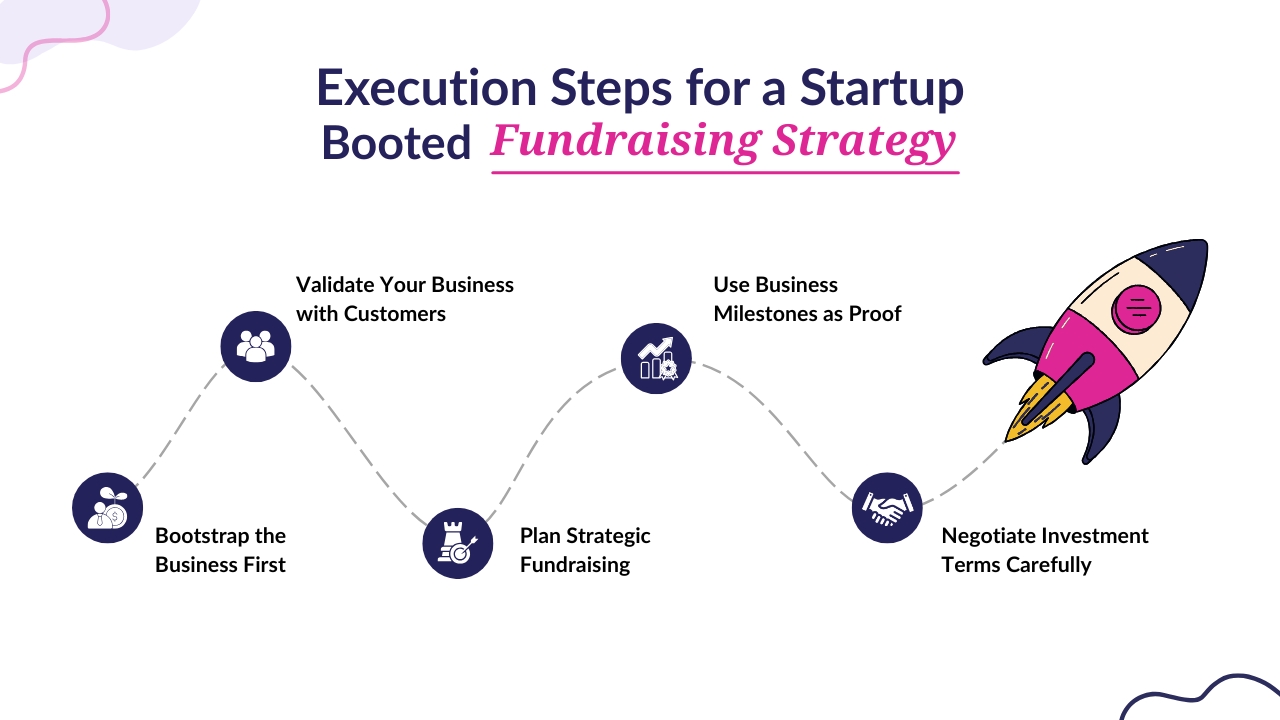
Implementing a Startup Bootstrapping Fundraising strategy, needs an organized approach which aligns well with sustainable growth for strategic fundraising.
Below are the steps that can help founders to build a strong financial foundation while having more ownership and control.
Bootstrapping fundraising strategies begin using personal savings, early business revenue, or any internal resources to develop a Minimum Viable Product(MVP).
This strategy allows founders to test their ideas, reduce financial risk, and establish a strong foundation even before searching for external funds.
Next, focus must be to acquire customers who make payments, securing pre-orders, and obtaining customer feedback to prove market demand.
Because when customers adopt your business early indicates that your business or service solves an actual problem that makes your startup more attractive to investors.
They must plan strategic fundraising by raising funds for achieving your next business milestones like increasing operations, hiring skilled staff, or launching a new product.
Raising only the required amount of capital, helps founders of their startups to maintain ownership and reduce unnecessary equity dilution.
Also Read: Top Online Fundraising Ideas to Grow Donations Fast
Approach investors after achieving success such as consistent revenue growth, customer retention, or profitable operations. Providing strong proof increases trust of investors and improves your negotiating position.
During investment negotiations, founders should consider more than just the valuation of companies. They should carefully evaluate equity ownership, board registration, voting rights, and investor protection terms to maintain control of the business and support its long-term growth.
This fundraising strategy has many benefits for business owners who want to expand their businesses while maintaining financial freedom and long-term control.
Using strategic funding rather than excessive external investment, startups can build a stronger and more sustainable foundation for fundraising.
This strategy gives ownership and decision-making authority to founders. Because founders raise less external capital, they can have more control over product development, hiring, pricing strategies, and long-term vision for companies.
Limited funding encourages nonprofits for careful budgeting and responsible spending. Founders become more selective about marketing, hiring, technology investments, and operational expenses, which results in stronger financial management and better utilization of resources.
Also Read: How to Set Up Multiple Funds and Split Giving Online
Bootstrapped startups focus on customer satisfaction and recurring revenue rather than depending highly on investors. Customer feedback helps them to improve products and services which ensures that business growth is driven by real market demand.
Rather than growing too quickly, startups grow steadily due to revenue and customer demand. This approach reduces financial risk, improves business operations, and creates a solid foundation for long-term success.
Without constant pressure from investors, founders can adapt their strategies more easily. They have the freedom to launch new products, explore new markets, improve pricing strategies, improve customer service, and grow at a pace which aligns with their business goals.
Also Read: How to Increase Church Donations with Online Giving Tools
While a Startup Booted Fundraising Strategy provides greater control and financial freedom as it also comes with several challenges that founders must manage carefully.
Bootstrapped startups often have fewer financial resources than venture-backed businesses. Limited funding can restrict hiring, marketing efforts, product development, and expansion into new markets.
Founders must focus on spending and allocating resources wisely to support sustainable growth.
Business growth is usually driven by business revenue instead of large investment rounds. As a result expanding operations, launching new products, or entering new markets may take longer.
However, this gradual growth often creates a stronger and more stable business foundation.
Founders usually manage multiple roles like sales, marketing, finance, operations, customer support, and fundraising. Balancing these responsibilities requires excellent time management, leadership skills, and the ability to focus on tasks effectively.
Also Read: Donor Management Software Guide: Everything Nonprofits Need to Know
Maintaining healthy cash flow is essential for ensuring long-term success. Unexpected expenses or delayed customer payments can affect daily operations, making accurate budgeting, financial forecasting, and expense control is crucial for business stability.
A successful Startup Booted Fundraising strategy depends on multiple funding sources rather than depending on a single option. Combining different funding methods helps startups to maintain financial stability while supporting sustainable growth.
Many entrepreneurs use personal savings to launch their businesses and cover initial expenses. As the startup begins generating revenue, profits are reinvested into product development, marketing, hiring, and business expansion.
This approach reduces depending on external funding while demonstrating the founder’s commitment.
Friends and family can provide early-stage funding while traditional financing is unavailable. To avoid future misunderstanding, founders should establish clear agreements showing investment amounts, repayment terms, and ownership expectations.
Also Read: 25 Online Fundraising Ideas listicle
Many governments provide grants to support technology startups, healthcare innovation, sustainability projects, social enterprises, and research initiatives, and women-led businesses.
As grants usually do not require equity or repayment, they are an attractive funding source for eligible startups.
Through crowdfunding startups can raise capital from a large number of supporters through online campaigns. It also helps validate business ideas, increase brand awareness, and build an early customer community before launching products or services.
Strategic partnerships with established businesses can provide financial support, industry expertise, distribution opportunities, or joint development projects. These collaborations help startups access valuable resources while accelerating business growth and expanding market reach.
As fundraising keeps shifting toward digital platforms, SimplyGiv has become a valuable solution for nonprofits, charities, social enterprises, and community-driven organizations.
The platform enables users to create online fundraising campaign, accept secure donations, manage peer-to-peer fundraising, and engage supporters through user-friendly digital tools. Its simple interface makes it easier to launch and manage successful fundraising initiatives.
For startups with a social impact mission, SimplyGiv complements a Startup Booted Fundraising Strategy by expanding fundraising opportunities, increasing campaign visibility, and simplifying donor management.
Through social media integration and online outreach, organizations can connect with a wider audience, strengthen donor relationships, and raise funds more efficiently.
Also Read: 50+ Raffle Basket Ideas That Actually Raise Money
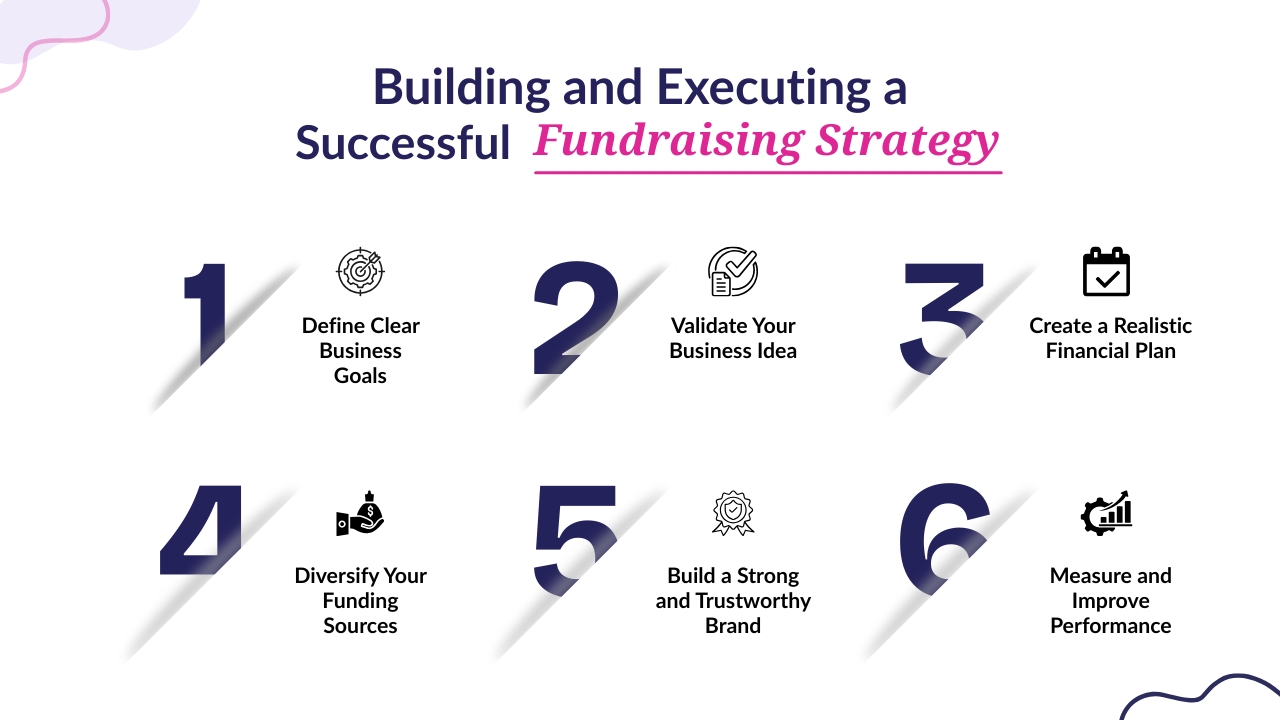
A successful Startup Booted Fundraising Strategy requires more than finding funding sources. It needs careful planning, disciplined financial management, and regular monitoring to ensure that the business grows sustainability while founders have more control over business decisions.
Below are the steps for building and executing an effective fundraising strategy.
It is essential to define clear business goals that show why your startup needs capital. These business objectives can be building a minimum viable product(MVP), hiring skilled employees, launching marketing campaigns, growing into new markets, purchasing equipment, improving technology, or increasing production.
Having clear goals is essential to estimate funding requirements accurately and avoids unnecessary fundraising.
It is essential to validate your business through early customer sales, product testing, positive customer reviews, waiting lists, user feedback, and consistent revenue growth.
Getting strong market validation builds credibility and increases trust among potential investors and donors.
It is essential to develop a detailed plan outlining startup expenses, monthly operating expenses, revenue projections, cash flow forecasts, marketing budgets, staff hiring plans, and emergency reserves.
Having a well-prepared financial plan shows responsible financial management and helps investors to understand how their funds will contribute for business growth.
Also Read: 20 Creative Fundraising Virtual Event Ideas for Nonprofits
Avoid relying on a single source for fundraising. Instead they must use customer revenue, personal savings, government grants, crowdfunding, strategic partnerships, angel investments, and business loans.
Instead, using diverse funding sources reduces financial risk, improves cash flow, and gets more flexibility during different phases of business growth.
A professional brand helps attract customers, investors, and fundraising supporters. They must focus on clear messaging, a strong online presence, customer testimonials, case studies, active social media engagement, and regular communication.
Building trust increases your reputation and the chances for successful fundraising campaigns.
They must regularly track important performance indicators such as monthly recurring revenue, customer acquisition cost, customer lifetime value, conversion rates, and return on marketing investment.
When all these metrics are reviewed, it helps founders to analyze the effectiveness of funds, improve financial decisions, and make strategic adjustments which support long-term business success.
Digital fundraising has become crucial for modern startup financing. As they use online fundraising platforms, startups can reach a larger audience, share their mission, and raise funds effectively than traditional fundraising methods.
While beginning a new business, supporting a social enterprise, or for funding a community initiative, digital fundraising provides a fast, cost-effective way to connect with their potential donors and supporters.
Some of the key benefits of digital fundraising include:
Online fundraising reduces the expenses while organizing physical events, printing promotional materials, and managing manual donation processes.
Digital platforms allow startups to create and start fundraising instantly which help them to respond to funding requirements without any much preparation.
Also Read: What Is Donor Management Software? A Complete Guide
Digital campaigns attract support from all over the world which increase fundraising opportunities beyond the local communities.
Modern fundraising platforms offer secure payment gateways which gives donors trust while ensuring safe and convenient online transactions.
Due to the rise in digital fundraising, platforms like SimplyGiv give tools to organizations that help them to manage fundraising campaigns more effectively.
This platform lets charities, nonprofits, social enterprises, and community organizations create online donation pages, organize peer-to-peer fundraising campaigns, and engage supporters through secure online giving.
Some of the ways SimplyGiv supports fundraising include:
These features help organizations to increase their fundraising efforts while giving donors a simple and convenient giving experience.
Also Read: How to Market Your Church for Growth
Below are some proven practices which help startups to achieve maximum fundraising success while building a sustainable business.
With a well planned Startup Booted fundraising strategy organizations can focus on long-term growth, effective financial management, and strong relationships with stakeholders.
Customer revenue is a dependable funding source for a bootstrapped startup. They must focus on providing high-quality products or services, resolving customer problems, and building long-term relationships with customers.
Having satisfied customers helps to generate recurring revenue and improve your business needs without any external funds.
It is essential to manage business expenses carefully and avoid unnecessary expenses. Create realistic budgets, track cash flow, and invest only in essential activities which increase your cash runway and reduce fundraising requirements in the future.
Also Read: Church Donation Kiosks: How Technology Is Modernizing Sunday Giving
Major focus must be to develop impactful relationships with mentors, advisors, investors, customers, and industry partners. With a strong professional relationship allows them to provide guidance, business opportunities, strategic partnerships, and access to funding sources in the future.
Communicate openly with investors, donors, and stakeholders by sharing updates on business goals, financial performance, and the way that funds will be used.
Being transparent helps businesses to build trust, credibility, and encourages long-term support.
Consistent evaluation of fundraising strategy, such as monitoring key performance indicators, and adjusting plans based on market patterns and business performance.
With consistent improvement of operations helps startups to remain financially stable, competitive, and prepared for future growth opportunities.
A startup booted fundraising strategy gives business owners a practical way to build and expand their business by maintaining ownership, financial discipline.
Rather than depending fully on venture capital, founders can use personal investment, customer revenue, grants, crowdfunding, and strategic partnerships to establish a sustainable funding model.
Achieving success with a bootstrapped funding approach needs clear business goals, careful financial planning, disciplined spending, and focus more on providing value to customers.
By testing products early, reinvesting profits wisely, and selecting funding sources which align with long-term objectives, startups can achieve stable growth while founders have more control over ownership.
Digital fundraising platforms like SimplyGiv have changed the way organizations connect with supporters, which makes it easier to launch online campaigns, manage donations, and build long-term relationships with donors.
Whether you are starting a technology startup, a social enterprise, or a nonprofit initiative, combining traditional bootstrapping principles with modern fundraising tools can help to build a resilient foundation which ensures future growth.
In today’s competitive business market, the most successful founders are those who consider fundraising as part of a wider business strategy instead of an end business goal.
Staying focused on sustainability, innovation, and customer value helps startups to build businesses which are not just well-funded but also well positioned for long-term success.
If you still have any query about Startup Booted fundraising strategy then you may Schedule a Call at SimplyGiv and we are more than happy to assist you.