
Digital Church Growth Strategies: How to Reach More People Online
In this digital world, churches must adapt new ways to connect with their supporters, so implementing…
Read More →
Short on time? Let AI do the work. Get the key points.
Visiting a church for the first time can be exciting for visitors but yet an unfamiliar experience. As a first time visitor if you are willing to explore Christianity, returning to church after many years, or searching for a welcoming faith community, this blog will help you feel informed and confident before you visit.
This detailed church visitor guide explains everything you need to know which includes church etiquette, what to wear to church, church service expectations, Christian worship, Bible teaching, prayer in church, church community, church ministries, volunteer opportunities, church fellowship, online church giving, and church welcome practices.
With these insights churches make their first-time visitors feel more comfortable, participate in church services confidently, and build impactful connections with their new faith community.
For churches, providing a smooth giving experience is an important part to support ministry and outreach. Through platforms like SimplyGiv helps churches and faith-based organizations to simplify online church giving with secure donation pages, recurring giving options, and easily manageable fundraising tools.
By making donations smooth., platforms like SimplyGiv allows churches to focus on welcoming visitors, improve their relationships with customers, and grow their mission.
Whether you are attending church for the very first time or reconnecting with your church or faith, then this blog offers practical advice that helps them to enjoy a meaningful and encouraging church experience.
Also Read: Church Donation Kiosks: How Technology Is Modernizing Sunday Giving
People visit church because of many different reasons, which are to explore faith to find hope, encouragement, and impactful relationships.
Even if you are a first-time church visitor or returning after many years, attending a church service offers an opportunity for visitors to experience Christian worship, learn through Bible teaching, and become a part of a welcoming church community.
Many people also seek spiritual guidance during challenging times or simply want to find what to expect at church before making regular church attendance as a part of their lives.
Common reasons people visit a church include:
Whatever be the background or beliefs of visitors, most churches warmly welcome every visitor with kindness, respect, and genuine hospitality.
Also Read: How to Start a Church: Step-by-Step Guide for New Pastors
When visitors prepare themselves for their first church visit then they can help them to feel relaxed, confident, and ready to enjoy the experience. If they prepare a little beforehand it allows every first-time visitor to focus on Christian worship, Bible teaching, and connect with the church community rather than feeling anxious about what to expect.
Most churches will happily assist new visitors and offer helpful information before their arrival.
Before attending the church, visit the church’s website or social media page to learn about its beliefs, church ministries, service schedule, and upcoming events.
This information will give you a better understanding of the church’s values and worship style. Be sure to check:
Many churches offer multiple services throughout the week such as traditional services with hymns and modern Christian worship with modern music.
And if visitors are unsure about the services that are suitable as per their preferences, then they may contact the church office or ask the friend or family member who invited you for recommendations.
Visitors must plan to arrive at least 10 to 15 minutes early to find parking, so that they can locate the main entrance, ask questions, meet welcoming volunteers, and choose a comfortable seat for themselves.
They must arrive early to reduce stress, must comfortably settle themselves, which allows them to begin their church service confidently and with peace of mind.
Also Read: Why Your Church Needs a Mobile Giving Solution This Year
As a first-time church visitor, one of the questions they will have in their mind is what to wear. While the clothing preferences vary based on the church, most churches welcome people regardless of their clothing.
But the focus is on worship, fellowship, and spiritual growth. So visitors are advised to wear clean, comfortable, and respectful clothing that helps them to feel confident and ready to enjoy their church service.
Common clothing choices include:
Visitors do not need to purchase a new outfit or dress perfectly. Most churches value your presence, faith, and willingness to participate more than their clothing.
When visitors arrive, then they will be greeted by volunteers or church members at the entrance. Their role is to help visitors feel comfortable and answer any form of queries.
They may assist you by:
Most churches also have a welcome desk where first-time visitors gain more information about ministries, upcoming events, and opportunities for them to connect with church members.
Also Read: Why Churches Need a CRM & How to Get Started
Every church has their own traditions and worship style, most church services have a similar structure such as Christian worship, prayer, learning, and fellowship.
Whether you are a first-time church visitor or returning to church after some time, then it is essential to understand the usual order of service that helps them to feel more comfortable and confident during their visit.
A typical church service may include:
Though the format and length of church services may be different, every service is designed to strengthen faith, spiritual growth, and build a deeper relationship with God.
Many first-time church visitors wonder if they are expected to participate in every church service. But the answer is no because most churches encourage guests to observe church services and participate only when they feel comfortable.
Visitors will not be forced to sing, pray aloud, or donate financially. Churches just simply have visitors to attend and experience the service at their own pace which is perfectly acceptable.
As a visitor, you are welcome to:
Also Read: How to Track Donor Engagement for Nonprofits and Churches
Worship is a core part of every church service that allows believers to honor God through songs, prayer, and heartfelt praise. Based on the church, church worship includes traditional hymns played along with a piano or organ, modern songs led by a worship band or a combination of both styles.
During worship, you may find people singing, praying quietly, standing, remaining seated, raising their hands, or reflecting silently. There is no expectation to participate immediately. People must feel free to observe, follow along, or join in whenever you feel comfortable and ready.
Prayer is a core part of every church service, and gives the church goers an opportunity to connect with God through thanksgiving, praise, and reflection.
If you are a first-time church visitor or a regular attendee, churches do not expect visitors to pray aloud or participate in any church services. Churches encourage everyone to engage in church services at their own comfort level while experiencing Christian worship and spiritual fellowship.
During the service, prayer may include:
And if visitors are unfamiliar with church traditions, then they must simply remain seated or stand with the church going. It is completely acceptable of visitors to quietly observe the church service.
Also Read: Text-to-Give for Churches: What It Is & How to Implement It
Reading from the Bible is a core party of every church service because it provides the foundation for the day’s teaching. When churches carefully select Bible passages, it encourages spiritual growth and helps worshippers to better understand God’s message.
The pastor or another church leader usually reads the Scripture while the church goers can follow along.
You can follow the reading using:
If visitors are not familiar with Bible references then they do not have to worry. Because most churches understand that their first-time visitors may be new to Scripture and will be happy to help.
The sermon, also known as the message. It refers to the teaching portion of the service. During the sermon, the pastor explains biblical passages and shares practical lessons that can be applied to everyday life.
These sermons are designed to increase faith, encourage personal growth, and encourage people to live as per Christian values.
Common sermon topics include:
Most attendees take notes to remember crucial insights, while other visitors can simply listen and reflect. Irrespective of the background of the visitor, the sermon offers practical encouragement and guidance that help to grow spiritually and deepen their understanding about their God’s word.
Also Read: How to Increase Church Donations with Online Giving Tools
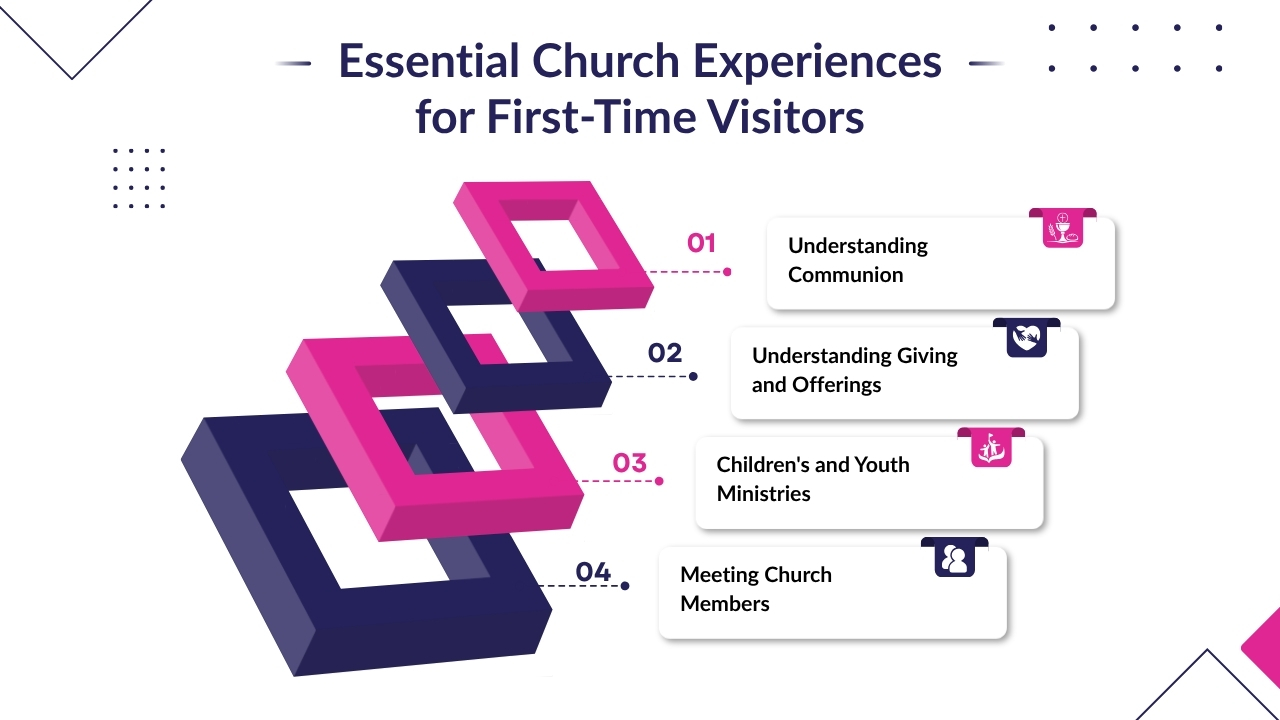
When visitors understand a few common church practices can help even first-time church visitors to feel more confident and comfortable during their visit.
So that every church visitor feels more confident and comfortable during their visit. Although every church has its own traditions, most churches share similar practices which encourage worship, fellowship, learning, and spiritual growth.
Many churches observe Communion. It is also known as the Lord’s Supper or Eucharist, which is a sacred act of remembering the sacrifice of Jesus Christ.
During Communion, bread and juice or wine symbolizes Christ’s body and blog. As every church has different traditions, visitors should never feel pressured to participate in communion.
Many churches gather offerings to support their ministries, missionary work, community outreach, charitable initiatives, staff, and operating expenses. Giving is considered as an act of worship but it is always voluntary.
Also Read: How to Use Data to Improve Donor Retention in Your Church
Many churches provide engaging programs for children and teenagers to help them grow in faith while learning in a safe and welcoming environment. These ministries allow young people to build friendships and develop strong Christian values.
Children’s ministries commonly include:
Youth ministries often provide:
And if your child is more comfortable staying with you during the service, then most churches are happy to even accommodate that choice.
Building relationships is an important part for visitors to feel involved in a church community. After the service most churches encourage fellowship through casual conservations, refreshments, and introductions.
You may have the opportunity to meet:
Visitors should not feel pressured to have long conservations or introduce themselves to everyone. Even a simple greeting is enough to start building connections.
Most church members are genuinely happy to answer your questions, explain church activities, recommend ministries, and help you feel welcomed.
Taking a few moments to connect with others can make your first church visit more enjoyable and may encourage you to return and become part of the church family.
Also Read: Church Events Management Best Practices (with Tools)
After the church service, many churches invite first-time visitors to stay for a few minutes to connect with the congregation and learn more about the church. This relaxed time offers an opportunity for visitors to ask questions, meet church leaders, and discover ministries or upcoming events without any pressure to make immediate commitments.
During this time, you may have the opportunity to:
If visitors prefer to take things slowly, which is perfectly fine. They must take their time getting to know the church community before deciding how you would like them to get involved.
Visitors who visit a church for the first time, it is natural to have certain questions in their mind.
Below are few common questions visitors may ask:
For first time visitors, it is an opportunity for visitors to explore, ask questions, and experience the church without much pressure. And every step that visitors take helps you to become more familiar with the community and the worship experience.
Also Read: How to Market Your Church for Growth
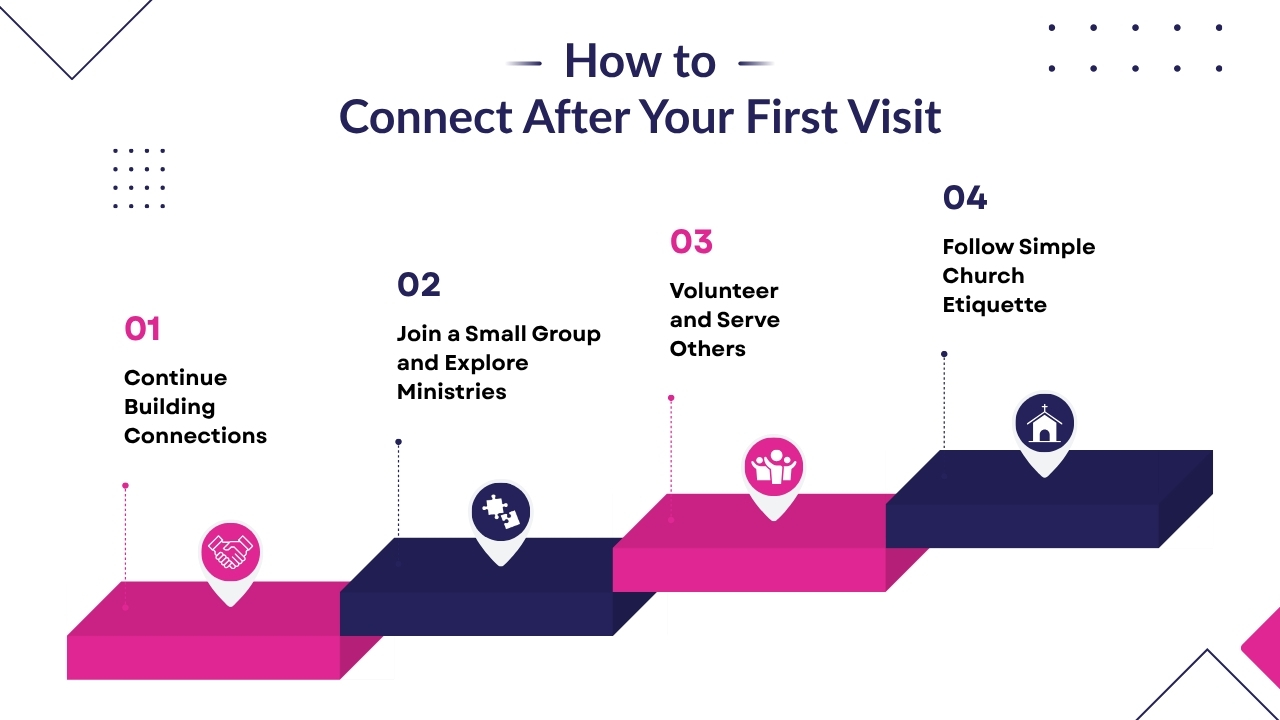
Your first church service is just the beginning of a spiritual journey. If a visitor had a positive experience then they must take a few simple steps afterwards which helps them to build lasting relationships, deepen your faith, and become more connected with the church community.
Visitors will not have any pressure to become a member or volunteer immediately. Rather they take time to learn about the church, participate in activities, and decide whether it is the right place for your spiritual growth.
Visitors must attend church and their services regularly that helps them to become familiar with the church’s worship style, ministries, and members and also helps them to develop impactful friendships.
Many churches provide small groups and ministries that offer small groups and ministries that offer a welcoming environment for learning, fellowship, and spiritual growth.
Such smaller gatherings make it easier for visitors to ask questions, share their experiences, and build supportive relationships.
Small groups may focus on:
Church ministries often include:
Most churches offer guidance and training making it easy for newcomers to get involved with confidence.
Also Read: How to Grow a Church Fast Without Losing Your Mission
Serving people is an important part of church life and lets them use their time and talents to support the church’s mission while forming impactful friendships.
Volunteer opportunities may include:
Visitors must understand basic church etiquette that can help first-time church visitors to feel more confident and respectful during future visits.
Volunteers must remember that church members understand that every visitor is new at some point. They are usually happy to answer questions, provide guidance, and help you feel welcomed as they continue your journey of faith.
Also Read: Digital Church Growth Strategies: How to Reach More People Online
Churches must create a warm and welcoming environment which is one of the best ways to help first-time church visitors to feel comfortable and encouraged to return.
When visitors have a positive first impression about churches and their services then it shows the church’s care, hospitality, and commitment to build a supportive church community.
With simple, thoughtful gestures , newcomers feel valued without making them feel pressured to donate, attend services or introduce themselves to church members.
Churches can improve the visitor experience by:
Such small acts of kindness give a memorable experience to visitors and encourage visitors to return confidently to the church.
Visiting a church for the first time is an important step in your spiritual journey, and it is natural to have questions or feel a little uncertain.
Fortunately, most churches are committed to creating a warm, welcoming environment where everyone can explore their faith at their own pace. By understanding what to expect before, during, and after a church service, you can arrive with greater confidence and enjoy a meaningful experience.
Take time to connect with the church community, ask questions, and participate in activities as you feel comfortable.
If one church doesn’t feel like the right fit, continue exploring until you find a congregation where you feel encouraged, supported, and spiritually nourished.
Whether you’re seeking hope, friendship, biblical teaching, or a deeper relationship with God, every visit is an opportunity to grow in faith. Remember, the journey doesn’t end after your first visit as it can be the beginning of lasting friendships, spiritual growth, and a meaningful connection with a caring church family.
If you still have any query about a First-time visitor guide, then you may Schedule a Call at SimplyGiv and we are more than happy to assist you.