How to Use Data to Improve Donor Retention in Your Church
In today’s digital world, churches strengthen relationships with their donors by using data insights which helps…
Read More →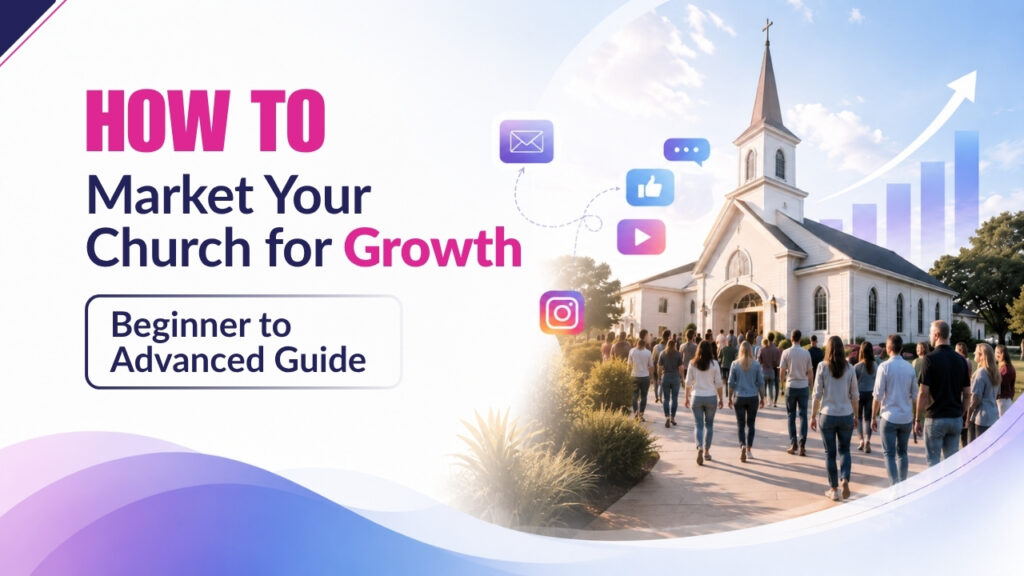
Short on time? Let AI do the work. Get the key points.
Understanding how to market your church for growth has become essential for ministries that want to reach more people, connect with new visitors, and develop a stronger faith community.
Today most people search for churches online before they even visit a church. People search for churches near me, service times, children’s ministry details, sermons, reviews, events, and signs that they will feel invited. It means your church’s message must be clear, visible, and easy to find.
Effective church marketing involves clearly sharing mission, building trust, and helping people to connect with your church community. It is about sharing your mission, sharing real stories, promoting impactful events, and helping people connect with your church community.
A strong church growth strategy involves having a mobile-friendly website, local SEO, optimizing Google Business Profile, social media content, email communication, community outreach, visitor follow-up, and clear calls to action.
Whether your church is just beginning or adopting more advanced strategies, while the goal remains the same which is to help people discover your ministry, may confidently visit, and become connected to the church community.
From beginner church marketing strategies like updating your website and posting regularly or advanced church marketing tactics like paid ads, analytics, automation, and retention campaigns.
This blog will walk you through the steps to build a practical, faith-centered marketing plan which supports real growth, stronger member engagement, and long-term ministry impact.
Also Read: Why Churches Needs a CRM
Church marketing involves the process of sharing your church mission, values, ministries, services, events, and community impact that the people that you want to reach.
It is not about following every trend or turning ministry into a business type operation. Rather it is about helping people to know about your church, understand what you offer, so that they feel confident about taking the next step.
A strong church marketing strategy includes both online and offline methods, such as:
The main goal of church marketing is to make it easier for people to find your church, make it easier for them to visit your church.
When someone visits your website or social page, they should quickly know:
Also Read: Church Events Management Best Practices With Tools
Church marketing is crucial these days because many people today search about church online before visiting a church in person. Though word-of-mouth invitations are powerful, it works well when there is a clear and active digital presence.
While if someone is invited to your church, then they may check your website, social media, reviews, service times, photos, and ministry details before they decide to attend your church events.
If your website is outdated, the information about your services on the website may be unclear, or the social media page looks inactive then the people may hesitate to visit your church.
Good church marketing removes these challenges. Because such marketing helps people to know what to expect, where to go, when to arrive, and how to take the next step. It also builds trust before a first visit.
A strong church marketing strategy is not just for increasing attendance for church activities. Rather it helps existing church members to stay connected, encourages engagement, promotes discipleship, and strengthens the overall church community.
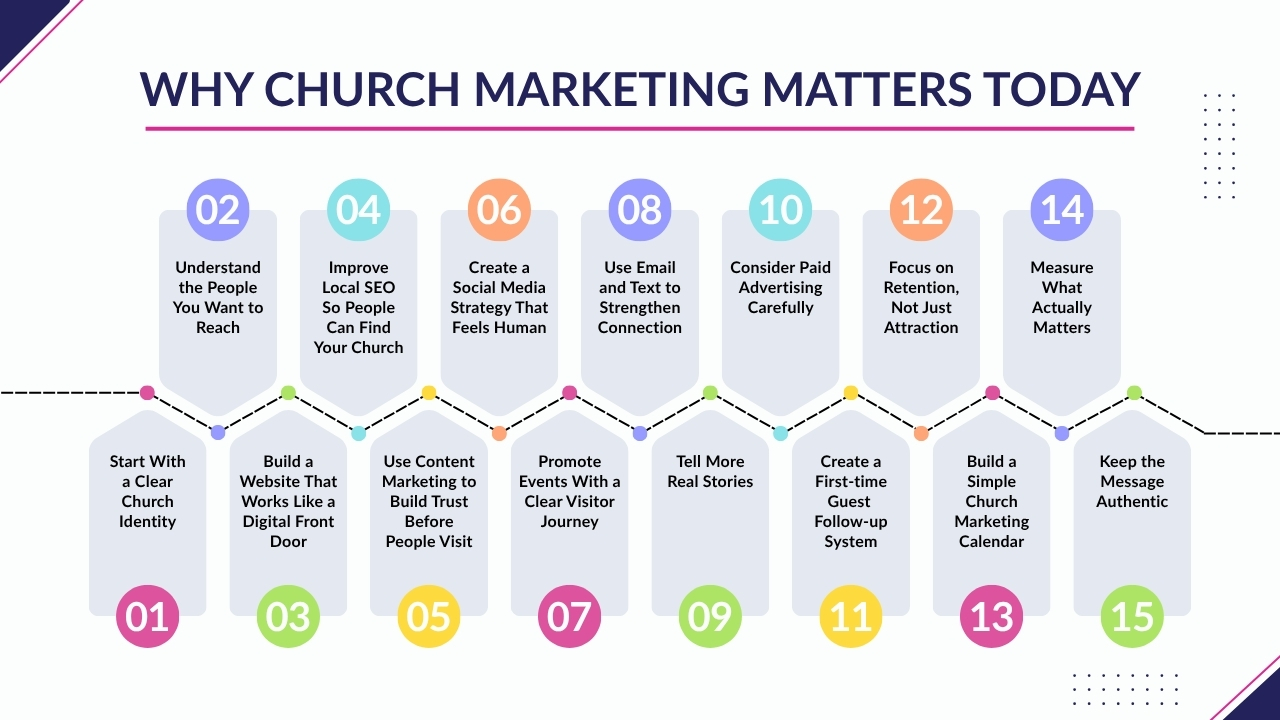
For churches before running their ads, posting on social media, or redesigning your website, it is essential that the church have a clear identity.
A clear church identity clarifies your mission, who you serve, and what you communicate, making every message more focused, consistent, and easy to understand.
A strong church identity includes:
Church branding goes beyond church logo, color palette, or church website design. Rather it is the overall impression people form when they experience your church through your website, services, events, or community presence.
Your church may be known as:
When your church identity is clear, then your messaging becomes easier for people to understand. Your website, social posts, flyers, signage, welcome team, emails, and event promotions should all members feel connected and consistent.
Also Read: How to Start a Church Step By Step Guide for New Pastors
Every community is different, so your church marketing should reflect the real people around you. A church in a college town may require different messaging than a church in a retirement community.
A suburban family church may also communicate differently than an urban church serving young professionals, immigrants, or people in difficult life situations.
Before creating your marketing plan, study your local area and ask:
Simple messages like “Join us this Sunday” are useful, but more personal messaging connects with people on a deeper level.
When churches know your audience, your marketing becomes more helpful, warm, and effective.
Also Read: How to Track Donor Engagement for Non-Profit and Churches
Your church website is mostly the first place that people visit before they attend in person. Social media can create awareness about your church, while your website helps visitors decide whether they feel comfortable about taking the next step.
A well-designed church website should be simple, fast, mobile-friendly, and easy to navigate. For first-time visitors, church websites must provide the crucial details which they require to feel prepared, comfortable, and confident before attending.
Your website should include:
Your Plan your Visit page should clearly explain arrival time, parking, dress code, kid’s ministry, and service length so that the guests are well prepared before attending before they arrive.
Ensure you include clear calls to action, such as Plan Your Visit, Watch a Sermon, Request Prayer, or Talk to a Pastor.
Also Read: Top Online Fundraising ideas to Grow Donation Fasts
It is essential for churches to improve local SEO so nearby people can easily find your church when they search for service times, directions, ministries, events or phrases like “church near me” in your area.
Local SEO helps your church appear when someone searches phrases like:
Your church does not require you to compete with every church online. It needs to show up for the right people in your local area.
Begin with your Google Business Profile. Google says a Business Profile helps organizations manage how they appear on Search and Maps at no charge.
Your profile should include:
Reviews from church members are crucial because they build trust. Encourage your church members and visitors to leave honest reviews about their experience. Never pressure people or add fake reviews. Rather real stories are more impactful.
Your website should also include location-specific pages and content. For example:
Each church page should be useful and not overstuffed with keywords. Explain in your website what people can expect, who the ministry serves, and how to get involved with the church.
Also Read: Digital Church Growth Strategies
Content marketing helps people experience your church before they ever walk through the door. Through sermons, videos, testimonies, devotionals, and event recaps, visitors can understand your message, value, and community before attending in person.
Most churches already create helpful content every week. The key is to repurpose it wisely. One Sunday sermon can become:
The goal is not just to post randomly. While the goal is to create content that answers real questions and helps people spiritually.
Good church content topics include:
Helpful content builds trust, creates connection, and encourages people to take the next step.
Also Read: Text-to-Give for Churches
Social media should do more than share church announcements. If your every post just promotes an event, people may stop paying attention. A strong church social media strategy should feel personal, helpful, and connected to real life.
Your content should include a mix of:
A simple weekly plan can help you stay consistent:
Choose platforms based on your audience. Facebook works well for families and groups, Instagram for visuals and reels, YouTube for sermons, and email or text for direct communication. Start with the platforms your church community already uses.
Church events are a great way to connect with people who may not be ready to attend a Sunday service. Events can feel more relaxed, welcoming, and easier for first-time visitors to join.
Helpful church event ideas include:
Each event should guide people through a clear journey:
Many churches promote events well but miss the follow-up. A simple thank-you message, prayer offer, or next-step invitation can help visitors stay connected.
Also Read: 10 Powerful Thanksgiving Sermons
Social media is helpful, but email and text give your church a more direct way to stay connected with members, visitors, and volunteers. These channels help you share crucial updates without depending only on social media algorithms.
Use email for:
Use text for:
Ensure you keep every message simple, warm, and personal. A short note from a pastor or ministry leader can feel more impactful than a strongly designed newsletter.
For new visitors, create a simple follow-up sequence. Send a thank-you message on Day 1, explain the next step on Day 2, introduce your team on Day 4, invite them back on Day 7, and ask how you can pray for them on Day 14.
Also Read: Text-to-Give Vs Text-to-Donate
Stories are an effective tool in church marketing as it helps people to connect with real people and their stories. Because there are chances that visitors may forget announcements, but they often remember stories of hope, healing, faith, and life change.
Share stories about:
Develop a simple system for gathering these stories regularly. Ask ministry leaders to submit stories every month, encourage church members to share testimonies through a form or record short video testimonies after baptisms, events, or outreach projects.
Before sharing any personal story, churches must ask for permission. Make sure you keep the tone authentic and natural rather than overly polished.
A strong story can answer:
Real stories show that your church is not just a building rather it is a community of people.
Paid advertising helps churches to connect with people more instantly, especially while promoting important events or local outreach efforts. Instead of waiting for organic outreach, ads allow churches to appear in front of the right people at the right time.
Campaigns can be customized for specific days like Easter and Christmas services, “Plan Your Visit” invitations, community events, kids ministry programs, marriage workshops, youth gatherings, prayer requests, and even search ads using phrases such as “church near me”.
However, effective ad campaigns need thoughtful planning and not just guessing.
Each campaign should include:
It is crucial not to direct all ad traffic to a homepage. Instead, develop specific landing pages that match with the purpose of the ads. For instance, an Easter page should include service times, location details, parking information, kids ministry options, photos, expectations, FAQs, and a clear “Plan Your Visit” button.
Creating a first-time guest follow-up is essential because a visit is only the starting of someone’s journey. While the actual impact happens in the days that follow.
The real impact happens in the days that follow.
A warm, thoughtful approach helps people feel valued without making them feel overwhelmed. While the goal is to build genuine connection, and not just apply pressure.
Start by collecting guest information in simple and natural ways. This can include:
Once information about church members is gathered, timely follow-up will have a huge impact on people.
A clear and consistent process could look like this:
This system ensures guests feel noticed and appreciated. Every visitor should leave knowing they were seen, valued, and warmly remembered.
Prioritizing only on attracting new visitors can cause missed opportunities if churches do not also help people connect, remain engaged, and grow over time.
When customer retention is weak, people may attend once or twice but never feel a sense of belonging. Long-term impact comes from guiding individuals into developing deeper connections, and not just increasing attendance numbers.
Retention strengthens when people clearly understand how to move from being a visitor to moving from being a visitor to becoming an active participant in the church community.
A clear and intentional pathway makes this possible. For example:
This kind of structure helps people take impactful next steps at their own pace. It also creates opportunities for relationships, spiritual growth, and purpose. People are more likely to stay when they feel connected and involved.
Church marketing should not end at bringing people in on Sunday. It should continue supporting engagement, helping individuals build relationships, discover purpose, and grow within the community over time.
Building a simple church marketing calendar creates consistency without overwhelming your team. Instead of trying to be active on every platform daily, prioritize a consistent and manageable pace that your team can realistically sustain.
Being consistent helps to build trust, keeps your church visible, and improves communication quality while reducing last-minute stress.
A monthly calendar can include:
Planning around seasons adds structure:
Such an approach keeps communication organized, clear, and effective.
Measuring church marketing effectively involves focusing on outcomes and not just surface-level metrics such as likes or views. Though visibility matters, the real goal is to see whether people are taking impactful next steps. Tracking the right data helps you understand the strategies that are working and where improvements are needed.
Key metrics to track include:
Review your data monthly and ask:
Use these insights to refine and strengthen your strategy.
For effective church marketing it is essential to keep the message authentic. When communication becomes more polished or disconnected from real ministry, it can feel distant or unrealistic.
People are not looking for a perfect church; they are looking for a genuine and honest community they can relate to and grow in.
Authentic communication should be:
Using real visuals also strengthens authenticity. Whenever possible, share real photos of volunteers, worship services, families, community moments, and outreach activities. This helps people see the actual life of the church rather than a curated version.
It is also important not to copy another church’s personality. While learning from others is valuable, each church should communicate its own identity, values, and mission in a way that feels true to who they are.
Church marketing is not just about replacing ministry, instead it is about strengthening it. From creating a clear website and simple media presence to advanced church strategies like paid ads, data tracking, and structured follow-up systems, every strategy helps more people to find your church, understand and connect with your church.
Growth of church happens when you are communicating with members intentionally, consistently, and focused on actual human needs rather than just promoting.
An effective church marketing is about clarity, authenticity, and connection. When people can easily find your church information, feel welcomed before they arrive, and experience impactful follow-up after visiting, they are more likely to stay and grow. Tools are strategies that are effective when they serve their mission.
The goal of church marketing is not just to attract attention from people but to guide people into community, discipleship, and service. It is also essential for churches to balance outreach with retention and creativity with authenticity, that builds lasting impact.
When these strategies are executed well, church marketing becomes less about promoting and more about helping people take their next step in faith and belonging.
If you still have any query about how to market your church for growth then you may book a free demo at Simplygiv and we are more than happy to assist you.