
Church events play an important role in building a strong and connected faith community. Church events such as weekly services, prayer meetings, youth programs, outreach activities, charity drives, and seasonal celebrations help bring members together and strengthen relationships within the congregation.
However, organizing church events successfully requires planning, clear communication, and coordination. Without the right systems, churches can face challenges like missed event announcements, volunteer schedule confusion, low member attendance, or event coordination difficulties.
This is where Church Events Management becomes essential.
Implementing effective church event management best practices, churches can organize successful church events which are smooth and create impactful memorable experiences for every member involved.
If an event is well-organized then it not just increases event participation but also ensures stronger engagement with community, volunteer involvement, and supports the complete mission of the church.
Today, most churches use digital systems to simplify planning and coordinating church events. Using the right Church event management tools helps to reduce administrative work and also improve communication and organization of church events.
Modern church event management tools help churches to manage event calendars, coordinate with volunteers, track member attendance, and handle event registrations through a single centralized system.
These tools help to ensure that important church events are not missed and that members receive timely updates about upcoming church events.
Applying Church Event Planning Strategies effectively helps church leaders to manage multiple events throughout the year without stressing staff or volunteers.
Whether creating clear objectives, organizing volunteer teams, promoting church events, or collecting feedback from members afterward, is a systematic approach that transforms the way churches manage their programs.
Through this blog, we will walk you through practical Church Events Management Best Practices and useful Church Event Management Tools which helps churches to plan church events effectively, improve member participation, and create memorable faith experiences which strengthen the community and ministry.
Also Read: Text-to-Give for Churches
Best Practices for Successful Church Event Management
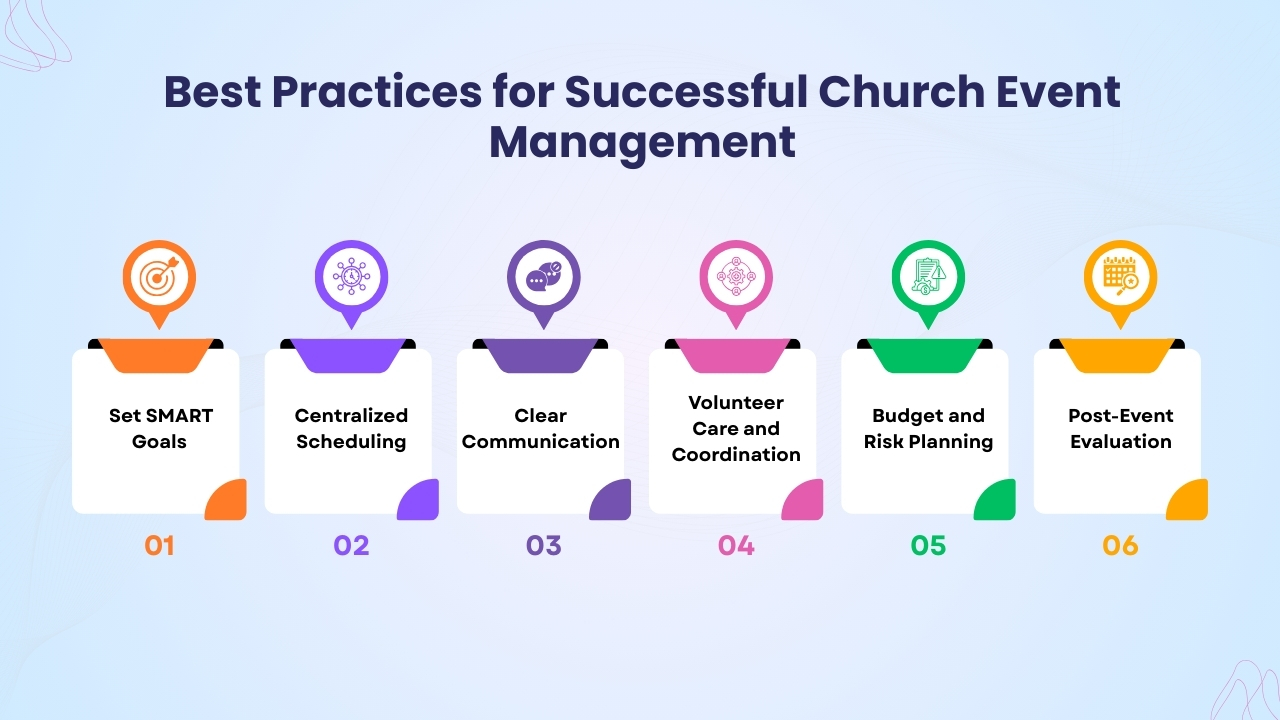
For organizing church event management successfully requires thoughtful planning, clear communication, and coordination. By applying proven church event management practices, helps churches to organize events that run smoothly, engage church members, and support the mission of the ministry.
Below are some important practices which help churches manage events effectively.
1. Set SMART Goals
It is essential to set clear and trackable goals for successful church events. Using the SMART framework helps churches to ensure that their event purpose is achievable and well-defined.
SMART goals are:
- Specific – It is essential that your church is specific about the event which they want to accomplish. For instance, organizing a community outreach dinner to welcome new visitors.
- Measurable – Find the metrics through which a successful church event will be assessed, whether it is the number of attendees, volunteer participation, or donations raised.
- Achievable – It is essential that you have realistic expectations based on the available resources, budget, and volunteers of your church.
- Relevant – It is essential to ensure that your church event aligns well with the mission and priorities of the ministry.
- Time-bound – It is essential to ensure that you have clear timelines for planning and executing church events.
Every church event has different objectives like fellowship, fundraising, education, or community service. Defining these goals early helps event planners to focus their efforts and allocate their resources efficiently.
Also Read: How to Increase Church Donations With Online Giving Tools
2. Centralized Scheduling
Churches usually organize multiple church events within a week, like worship services, ministry meetings, youth programs, and outreach initiatives.
Without having a centralized event scheduling system, there are chances of event scheduling conflicts. Using a master church calendar helps to avoid chances of any overlapping church events and also ensures that right facilities and volunteers are available during the events.
Advantages of centralized scheduling include:
- Avoiding scheduling conflicts between ministries
- Improving coordination between staff and volunteers
- Ensuring church spaces are used efficiently
- Giving members clear visibility of upcoming activities
Digital tools like Google calendar, church management software, mobile church apps help to maintain a shared event calendar. Offering access to both staff and congregation helps them to remain informed about upcoming church events.
3. Clear Communication
One of the most important factors for successfully organizing church events is strong communication. Members are required to be provided with accurate and timely information about event details so they can plan their participation beforehand.
Churches should use multiple communication channels to ensure that church event announcements reach every member.
Effective communication methods include:
- Email newsletters to provide detailed event information
- Text messages or SMS reminders for quick updates and reminders
- Social media posts to reach members and the broader community
- Church website event pages for centralized event details
- Sunday service announcement to reinforce awareness
Targeted communication helps to ensure that the right audience receives the details about upcoming church events. For instance, sending youth event details to youth groups and parents, while promoting outreach events with the wider community.
It is essential to send reminders about upcoming church events which will eventually increase attendance and engagement from members.
4. Volunteer Care and Coordination
Volunteers are the foundation of major church events. Because volunteers help with hospitality, setup, technical support, and guest guidance. When there is proper coordination among volunteers ensure that church events happen smoothly and efficiently.
Important volunteer management practices include:
- Clearly defining volunteer roles and responsibilities
- Providing training or orientation before the event
- Sending reminders and schedules in advance
- Offering guidance during the event to ensure tasks are clear
- Recognizing and appreciating volunteer contributions
Churches should take care of volunteers, and ensure that volunteers feel valued and supported. Expressing your thankfulness through thank-you messages, recognizing volunteer work during services, or organizing volunteer appreciation events helps to maintain strong engagement with volunteers.
When volunteers feel appreciated, then there are high chances that they will continue serving and supporting future church events.
Also Read: How to Start Church Step By Step Guide for New Pastors
5. Budget and Risk Planning
Financial planning is also essential while organizing church events. Ensure you create a realistic budget which helps to ensure that resources are allocated well and also deliver an impactful church event experience.
A well-planned budget should include:
- Venue preparation or equipment costs
- Food or hospitality expenses
- Promotional materials
- Transportation or logistics
- Technology or media support
When expenses are tracked throughout the planning process, it helps to avoid any overspending and keeps the church events within your budget.
In addition to financial budgeting, it is essential that churches also consider doing risk planning. Because unexpected disruptions can happen, like weather issues, equipment failures, or last-minute cancellations. Having contingency plans helps to reduce disruptions and ensures church events happen smoothly.
Instances of contingency planning include:
- Backup indoor venues for outdoor events
- Extra volunteers for critical roles
- Alternative communication plans if schedules change
- Technical backup equipment for presentations or sound systems
Planning for potential risks helps to ensure that the church events are successful even when there are challenges.
6. Post-Event Evaluation
The event management process does not end when the event concludes. Rather evaluating the after event offers the insights which helps to improve planning for future church events.
Church leaders should review several key areas after each event:
- Attendance levels compared to expectations
- Budget performance and whether expenses stayed within limits
- Volunteer participation and coordination
- Feedback from attendees and volunteers
Gathering feedback through surveys or casual conversations helps to find the strengths and areas of improvement.
Questions for evaluation may include:
- What aspects of the event were most successful?
- Were communication and registration processes effective?
- Did volunteers feel prepared and supported?
- What changes could improve future events?
Reviewing these insights, helps churches to refine their event planning strategies and consistently improve the quality of church events.
Why Effective Church Event Management Matters
Church events are more than scheduled member gatherings on a calendar. They are impactful opportunities for churches to ensure spiritual growth, fellowship, outreach, and stronger connections with community.
Whether worship night, fundraiser, youth program, or holiday celebration, a well-organized ensures that people feel invited, valued, and engaged.
If there are positive experiences at church events often makes stronger relationships with members and encourages first-time visitors to return and become an important part of the congregation.
While if the church events are poorly managed, then members can feel discouraged. Late communication, unclear volunteer roles, missed details, and last-minute confusion can frustrate staff, volunteers, and attendees.
With time, these challenges may reduce participation from members and make it harder for the church to gain attention around future church events.
Ensuring effective church event management helps to ensure that every event runs smoothly and supports the mission of the church. It allows leaders to coordinate with volunteers, manage schedules, handle logistics, and communicate clearly with the congregation.
It also offers insights through attendance tracking, feedback, and participation records. When church events are well organized then church leaders can focus on ministry, service, and establish lasting impact within their community.
Practical Tips for Managing Church Events Successfully
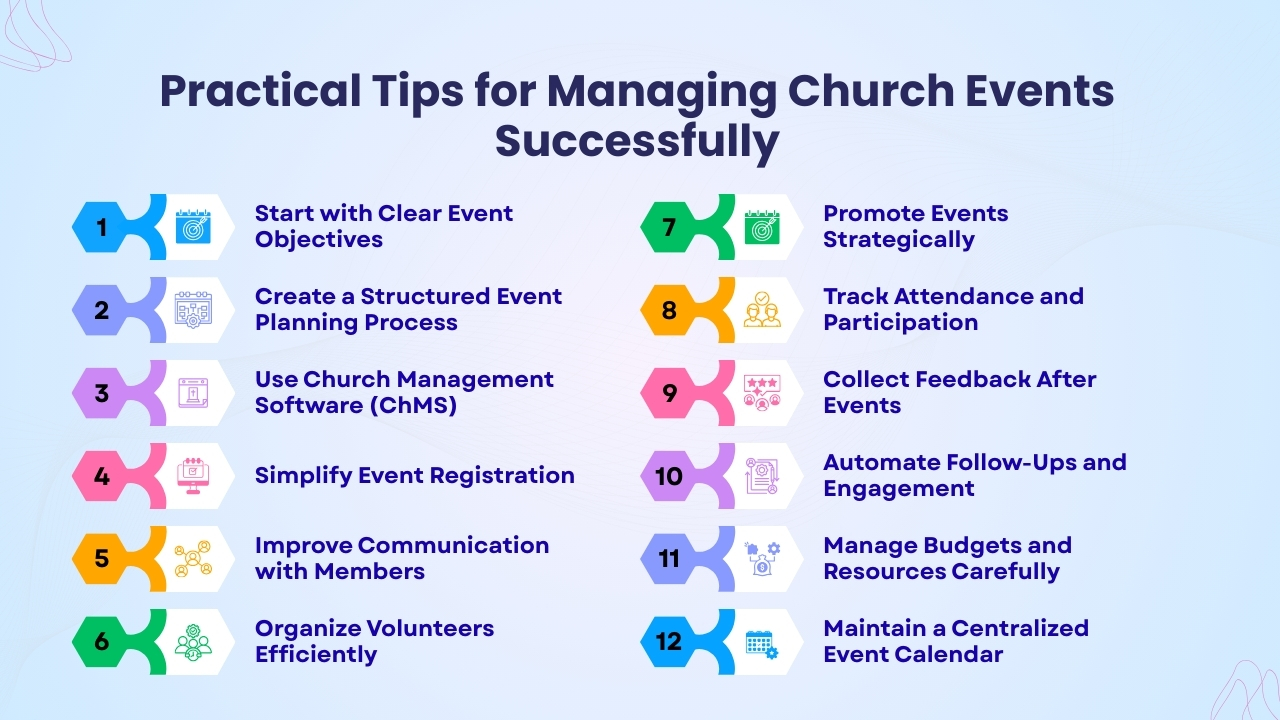
1. Start with Clear Event Objectives
For managing a church event successfully, it should have a clear and impactful purpose. So church leaders are required to define the goals which they want their church events to achieve.
Knowing the goal behind each organized church event helps churches to guide crucial decisions like scheduling, promotion, budgeting, volunteer roles, and resource allocation.
For instance, a youth retreat helps to make stronger friendships among teenagers while increasing spiritual growth and faith. A fundraising event helps to focus on creating support for community outreach programs or special ministry needs.
When the objectives of church events are clear, it helps church leaders to make the right decisions regarding church events, expected member attendance, and preparation required.
When volunteers, staff, and ministry leaders understand the purpose behind each church event, then event planning becomes organized, teamwork improves, and the event will have a positive and lasting impact on the church members.
2. Create a Structured Event Planning Process
Church events include many processes such as venue setup, volunteer coordination, promotions, registrations, materials, and post-event follow-up.
Without a well-organized planning process, all these responsibilities can quickly become stressful and often lead to missed details. While a clear event plan helps churches to remain organized, reduce stress, and ensure that every process is handled on time.
Ensure that churches begin event planning either weeks or months ahead on the basis of the size and purpose of the event.
Having a clear timeline helps leaders and volunteers to know the processes that need to be done and when. It also helps to avoid confusion and keep the entire team aligned.
Typical event planning steps include:
- Defining the event purpose
- Selecting the date and location
- Assigning planning responsibilities
- Creating a promotion strategy
- Managing registrations or attendance tracking
- Preparing materials and logistics
- Coordinating volunteers
- Conducting post-event follow-ups
Creating a checklist for each planning process ensures every process is well executed. Tools like Trello, Monday.com can help churches manage tasks more efficiently.
SimplyGiv helps churches for easy event registrations, donations, volunteer coordination, and communication which makes church event planning more organized, efficient, and easier for staff.
3. Use Church Management Software (ChMS)
One of the effective ways for simplifying church event management is to use Church Management Software(ChMS). Such platforms help to do administrative operations through a single system that helps church staff to manage events more efficiently.
Rather than managing events manually through spreadsheets, email, and separate tools, it helps churches to coordinate with event planning, communication, and volunteer scheduling from a centralized system.
A centralized system helps churches to organize tasks, track attendance, and attendance with church members easily. This not just reduces manual work but also helps church leaders to focus on ministry activities and community engagement instead of administrative tasks.
Common features of church management software include:
- Event calendar management
- Online event registrations
- Volunteer scheduling and coordination
- Email and SMS communication tools
- Attendance tracking and reporting
- Integration with the church member database
Popular ChMS platforms include:
- Planning Center
- Breeze Church Management
- Church Community Builder
- FellowshipOne
- SimplyGiv Church Tools
Using a centralized management system improves organization, strengthens communication and helps churches run events more smoothly.
Also Read: How to Track Donor Engagement and Non Profits for Churches
4. Simplify Event Registration
Managing church event attendance manually through paper sign-up sheets, or email lists can cause confusion, missed event details, and unnecessary administrative work.
Online event registration tools simplify the process and are more organized for both church staff and attendees. It helps churches to gather registrations accurately while establishing a smooth and convenient experience for members.
When registrations are done online, it helps church leaders to track the number of members who attended events, manage their church capacity, and collect important details in advance.
These details include dietary requirements, transportation requests, volunteer interest or accommodations.
Ensure that the registration links that you provide can be shared easily through church websites, email newsletter, and social media platforms that make it easier for members to respond quickly.
Benefits of online event registration include:
- Accurate attendee tracking
- Automated confirmations and reminders
- Reduced administrative work
- Easier event planning and preparation
- Better communication with attendees
Common church event registration tools include:
- Eventbrite
- Planning Center Registrations
- Church Community Builder
- Google Forms
- SimplyGiv Event Tools
These tools help churches to simplify and implement effective church management strategies to manage events, improve communication, reduce mistakes, save time, and create a seamless experience for staff, volunteers, and attendees.
5. Improve Communication with Members
Clear communication is essential for managing church events successfully. Because members require timely and accurate information about event dates, locations, schedules, registration details.
When churches do not communicate properly about church events or delay in informing about church events, then people may miss to know about important church updates, forget event details, or choose not to attend the event.
Many churches may struggle with communicating about church events or may announce events through Sunday announcements only. Event announcements are helpful, but only announcing events is not enough.
Most members respond more when they receive event reminders through several channels. Using both digital and traditional communication helps churches to reach more people effectively.
Best communication practices include:
- Email newsletters
- SMS reminders
- Church mobile apps
- Social media updates
- Website event calendars
- Push notifications
Using different channels helps members to receive updates in the format which they prefer and also increases the chances of the event messages to be seen.
Helpful communication tools for churches include:
- Mailchimp
- Constant Contact
- Planning Center Messaging
- WhatsApp groups
- Church mobile apps
When you communicate about church events consistently then it helps to create awareness, member participation, and helps church events to run smoothly.
Also Read: How to Setup Multiple Funds and Split Giving Online
6. Organize Volunteers Efficiently
Volunteers are also essential for organizing church events successfully. Volunteer help while welcoming guests, managing registration desks, coordinating activities, setting up equipment, and providing hospitality during the event.
If volunteers are not dedicated then many church events cannot be easily managed smoothly.
However, coordinating volunteers without a clear plan can often cause confusion or burnout. Some volunteers may feel stressed with too many responsibilities, while other volunteers may not fully understand their roles.
An organized volunteer management process helps to schedule volunteer tasks fairly and ensures that volunteers are aware about their responsibilities.
Best practices for managing volunteers include:
- Creating clear volunteer roles and responsibilities
- Scheduling volunteers in advance
- Sending reminders before the event
- Providing simple training or instructions
- Recognizing and appreciating volunteer contributions
Helpful volunteer management tools include:
- Planning Center Services
- SignUpGenius
- VolunteerHub
These tools help churches to manage volunteer schedules, track their participation, and communicate volunteer responsibilities clearly which helps to create an organized and positive volunteer experience.
7. Promote Events Strategically
Even if your church events are well-organized but still can experience low member attendance if they are unaware about those events. Promoting church events play an important role in encouraging member participation and ensure that the event reaches the right audience.
When events are clearly and consistently promoted helps members to stay informed and builds excitement around upcoming church events.
Churches should begin promoting church events early and continue sending reminders as the event date approaches. Early announcements about upcoming church events help members to plan beforehand, while regular follow-up reminders help to keep the event in member’s minds.
Using multiple communication channels for promoting upcoming events increases the chances that members will see about the events and remember the event details.
Effective church event promotion strategies include:
- Sunday service announcements
- Church website event listings
- Email campaigns and newsletters
- Social media posts and event pages
- Printed church bulletins
- Community outreach flyers
Visuals like event graphics, posters, and short promotional videos can increase engagement online and gain more attention.
A phased promotion approach works best:
- Initial event announcement
- Midway reminder updates
- Final reminders during the week of the event
This strategy helps to maintain awareness, build anticipation, and encourage greater participation from the congregation.
Also Read: Easy Christmas Fundraising Ideas You Can Start Today
8. Track Attendance and Participation
Tracking member attendance and participation offers insights to church leaders about how well the congregation are able to attend church events.
When churches know the programs that have the highest participation, they can better understand the member interests and where to focus future effort.
It helps to improve event planning and ensures time, energy, and resources are used wisely.
Tracking member attendance during events helps churches to identify engagement patterns. Leaders get to know about the members who regularly participate in events and also know about those members who may need more motivation, personal outreach, or additional support.
It helps to make stronger relationships with members and build a more connected church community.
Church management software has tools which automatically record registrations, check-ins, and member participation which makes the purpose easier and accurate.
Benefits of attendance tracking include:
- Identifying popular programs
- Understanding community interests
- Improving future event planning
- Monitoring volunteer involvement
- Supporting follow-up outreach
The data collected through tracking the member attendance helps churches to make informed ministry decisions. Due to such visibility about member participation, church leaders can plan impactful events and serve their church members with more care and effectiveness.
9. Collect Feedback After Events
Collecting feedback after events helps churches to evaluate what worked well and identify the areas for improvement. Gathering input from attendees, volunteers, and event organizers offer insights essential for future event planning.
Churches may use short surveys or informal conversations for collecting feedback.
Questions may include:
- What did you enjoy most about the event?
- What could be improved for future events?
- Was communication clear and helpful?
- Would you attend similar events in the future?
Many online survey tools like Google Forms, SurveyMonkey, or Typeform help churches to collect feedback from members instantly.
Analyzing feedback from members helps churches to refine their event planning process and meet the needs of their church goers.
Also Read: Text-to-Give for Churches
10. Automate Follow-Ups and Engagement
The impact of church events does not end once when the event concludes. Rather follow-ups after the events helps to maintain relationships and encourage continuous member engagement.
So churches can send follow-up messages thanking attendees, sharing highlights of the event, or encouraging members to participate in future church events.
Instances of effective follow-ups include:
- Thank-you emails to attendees and volunteers
- Photo galleries or recap videos
- Invitations to upcoming events
- Requests for feedback surveys
Automating follow-up messages through church management software helps to ensure regular communication with members while reducing administrative work.
These small gestures help members to feel appreciated and encourage long-term engagement within the church community.
Also Read: 100 Best Thank You for Donation Quotes
11. Manage Budgets and Resources Carefully
Church events often include financial considerations like venue preparation, catering, equipment rentals, and promotional materials.
Tracking event expenses helps churches to manage their budgets responsibly while ensuring resources are used effectively.
Best budgeting practices include:
- Setting a clear event budget
- Tracking expenses during planning
- Monitoring vendor costs
- Reviewing spending after the event
Financial management tools such as QuickBooks, Wave Accounting, church-specific financial systems help to track expenses related to events.
With careful budgeting churches can ensure that events remain sustainable and financially responsible.
12. Maintain a Centralized Event Calendar
Churches often organize multiple programs simultaneously whether worship services, Bible studies, community outreach events, youth gatherings, and special celebrations.
Without having a centralized calendar, there are chances of scheduling event conflicts. While maintaining a shared church calendar helps staff and members to remain informed about upcoming activities. It helps leaders to avoid any overlapping events which may divide member attendance.
Digital calendars can also be shown on church websites and synced with mobile devices.
Tools such as Google Calendar, Planning Center Calendar, or church management software helps churches to easily manage schedules and keep every member informed.
Conclusion
Effective church event management plays an important role in establishing stronger community connections, that supports ministry goals and creates impactful experiences for members and visitors.
If an event is well-organized it helps churches to bring members together for worship, fellowship, outreach, and services.
Because when events are thoughtfully planned and communicated to members, it encourages participation from members and helps build stronger relationships with the church goers.
Applying best practices like defining clear objectives, creating organized planning processes, organizing volunteers, and promoting church events strategically to improve the success of church programs.
Tracking member attendance, gathering feedback from members, and maintaining a centralized event calendar helps church leaders to learn from each event and plan future events more effectively.
Modern church management tools simplify the process by helping churches manage registrations, volunteer schedules, communication, and facility planning from a single platform.
Tools like Planning Center, Breeze, Tithe.ly, and SimplyGiv offer practical solutions which help to reduce administrative work and improve coordination with members.
Combining thoughtful planning with the right systems, helps churches to manage events more effectively and focus more on the processes that matters most which is serving the community and supporting spiritual growth.
Strong event management helps churches to create welcoming, impactful experiences which encourage more engagement and long-term involvement from members.
If you still have any query with the church events management best practices with tools, you may book a free demo at SimplyGiv and we are more than happy to assist you.