Monthly Giving: Complete Guide for Nonprofits
For nonprofits, developing reliable funding is essential for sustaining their programs and to achieve their long-term…
Read More →
Short on time? Let AI do the work. Get the key points.
Running a donation campaign successfully involves beyond asking your supporters to donate. Instead in today’s highly competitive fundraising landscape, it is essential for organizations to have a clear fundraising strategy, strong planning and message to encourage supporters to give.
Whether you are raising money for a nonprofit, school, church, or personal cause, success of your fundraising campaign relies on how well you connect with donors and communicate your mission to them.
A well planned donation campaign, helps to build donor trust, increase online donations, and also create long-term support for your cause.
People are most likely to donate when they understand the purpose behind your donation campaign, see the impact that their donation makes on other’s lives, and emotionally connect to the story behind it.
Hence, it is essential to have an effective fundraising campaign with clear goals, impactful storytelling, smooth donation process, and consistent outreach through email, social media, and other digital channels.
From setting a practical fundraising goal, improving donor engagement, promoting your message effectively, each step has its own importance for achieving donation campaign success.
A strong campaign is not just about collecting donations; rather it involves building relationships with supporters, encouraging community involvement, and showing supporters how their donation makes a difference in other’s lives.
Through this blog, we will walk you through how to run a successful donation campaign, which includes how to define your purpose, reach the right audience, create an effective donation page, and keep the drive going until you reach your target.
Having the right approach helps your nonprofit fundraising efforts to attract more donors, improve donations, and build a lasting impact for the people and communities which you serve.
Also Read: How to Increase Church Donations With Online Giving Tools
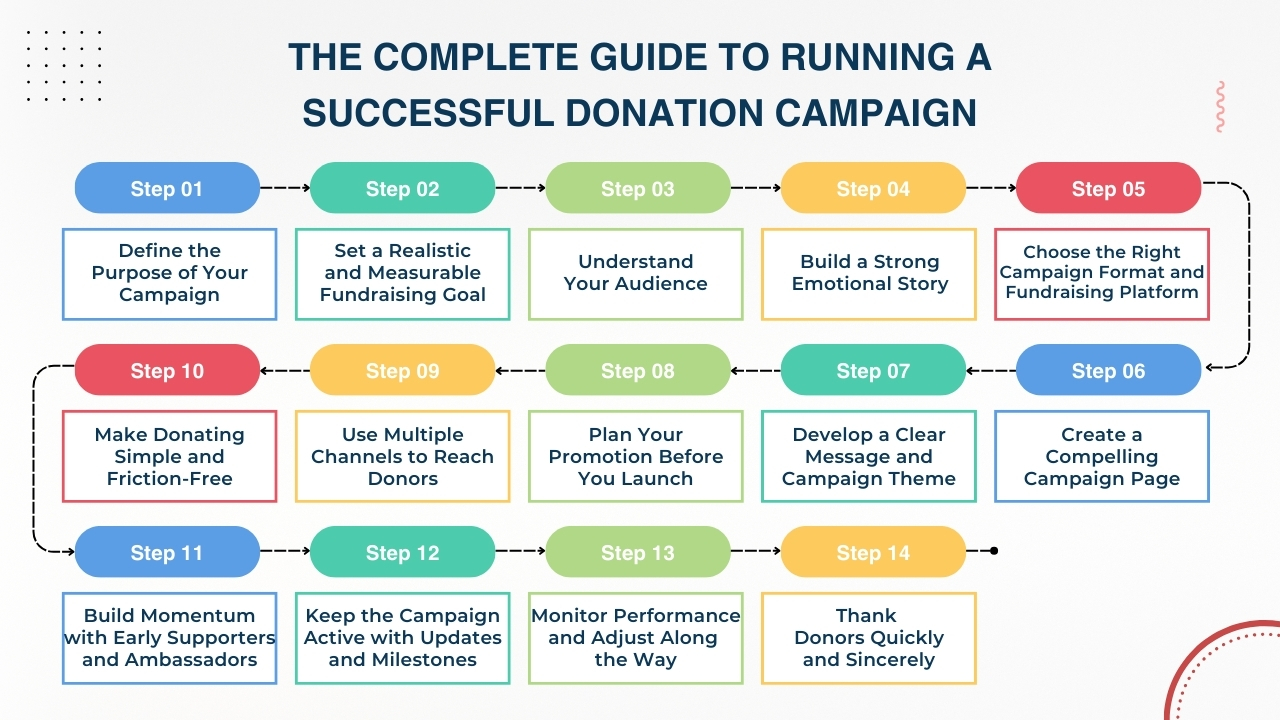
The first step for running a donation campaign successfully is to know the purpose of your campaigns. Because chances are high that people will donate when you have a specific and impactful purpose.
If your goal behind the donation campaign is unclear such as “support our mission” then it may not create a feeling of urgency among supporters. When your fundraising message is clear like “help us provide school supplies for 500 before the new school year begins” feels clear and convincing.
Start by answering few important questions:
Ensure that the purpose behind the donation campaign is simple so that someone can understand it within seconds. Because donors are more likely to give when your donation message is simple, clear, and easy to understand.
Because when the purpose behind your donation campaign is clear, it becomes easier to write a powerful message, create an attractive donation page, and encourage your donors to share your donation campaign with others.
A strong donation campaign purpose keeps every team member aligned. It is important that everyone involved in the fundraising effort should be able to explain your donation campaign in the same way.
And when the effort is consistent it helps to build trust and makes your message more memorable among donors.
Also Read: Top Online Fundraising Ideas to Grow Donations Fast
For running a donation campaign successfully it is essential to have a realistic target or goal. Because wḥen you have a clear fundraising goal it helps to give a proper direction for your donation campaign and gives donors an impactful target to achieve.
Without having a specific goal, people may feel a sense of urgency for making donations or progress.
Make sure that your fundraising goal is realistic, specific and also based on real causes. If you want to raise $10000 for funding a cause, explain how that donation amount is determined.
For instance, instead of simply mentioning that your donation amount needs $10000, you must explain that $25 is for meals for a family for a week, $100 is for school materials for 5 students, and $500 supports a full month of essential supplies.
Such breakdown of donation amount helps donors to know the impact of their donation directly. It also makes that total donation goal achievable. Smaller impact-based donation explanations make giving more personal and impactful.
Your donation goals should include more than the donation amount which you want to raise. So it is essential that you also set other goals like the number of donors that you want to reach, the email open rates which you want to achieve, or the number of social media shares which you want to generate.
These smaller metrics help to measure campaign performance just on the basis of donations alone. A clear fundraising goal offers focus for your donation campaigns and provides supporters an impactful target to achieve.
Also Read: How to Setup Multiple Funds and Split Giving Online
Every donor does not donate for the same cause. While some donors are more connected to their cause other donors can relate well to emotional storytelling.
Where some donors prefer measurable outcomes, while other donors are encouraged if there is a community involved or faith-based value. It is essential to know your audience which helps to convey your message which donors can relate to.
Begin by identifying the donors who are most likely to support your donation campaigns. It includes past donors, volunteers, families, local community members, business partners, social media followers, or people who feel connected to the cause personally. Accordingly every donor may require a slightly different message to which they respond well.
For instance, past donors may respond well if you show progress since they last made donations. Because your new supporters require a more powerful introduction to your mission.
Most donors want to know deeply about the impact that their donations will make on other’s lives while if there are peer to peer fundraising supporters they just care whether they are able to share emotionally engaging content.
So it is essential for you to think about the factors that matter to your audience. It is only when you deeply understand your donors that you can convey directly to their values and increase the chances of responding and engagement.
A fundraising campaign can only be successful when donors are able to connect genuinely with your donation campaign. Because donors who feel that they are understood, appreciated, and included are more likely to donate regularly.
Also Read: 100 Best Thank You For Donation Quotes
Building a strong emotional story around your donation campaign is an effective approach as supporters connect deeply with real life experiences instead of just donation statistics.
Supporters who want to know who they are helping, challenges those individuals or communities face, and how their donation will make an impact need to know the strong emotional story behind their donations.
A powerful emotional story transforms your campaign from a simple request for money into opportunities for creating real change. Ensure that your donation campaign focuses on genuine people, real needs, and positive outcomes.
It is essential that you show the cause behind the donations clearly, and also offer hope to your donors by explaining how their support can improve others lives.
Most importantly, helps donors to see that they are being part of the solution. When people feel that their donation has an impact on other’s lives, they become more motivated to give.
Ensure you use warm, natural, and compassionate language instead of formal or generic phrases for donation messages. Build your story with photos, videos, or testimonials whenever possible.
It helps to add emotion, build trust, and give donors a powerful reason to remember, respond, and take action.
Also Read: Text-to-Give for Churches
Once your purpose, audience, and message is defined, the next step is to choose the right format for your campaign. Some donation campaigns work best as short-term efforts especially for urgent requirements such as emergency relief, disaster response, or year-end giving.
While other donation campaigns may be more effective when they are longer campaigns such as an awareness month, community event, or large fundraising project.
Ensure that your campaign format aligns well with your goal. Your donation campaign format must match with the way donors prefer to donate.
If your donation campaigns are short-term then it can create a sense of urgency and quick action while if your donation campaigns are long it helps to build drive with time through updates and continuous engagement with donors.
Some organizations also have strong results when they combine online donations with events, text to give options, peer-to-peer fundraising, or sponsorship opportunities.
Even the fundraising platform that you implement and use is equally important. Ensure that your platform is secure, mobile-friendly, simple to use, and easy for donors to trust.
An effective donation page with your goal, impact, and call to action can make giving easier for donors and help to increase completed donations.
Also Read: Church Donation Kiosks
Create a compelling campaign page as your campaign page is crucial where the interest of donors converts into action. When someone clicks through from an email, social media post, or text message then your donation page does the work of convincing donors to donate.
For creating a good campaign page it is essential to have a clear headline that explains the purpose behind your donation instantly. Ensure that you include a short and emotionally engaging summary of the campaign, further include photos or videos, and a visible donation button.
This makes it easy for visitors to understand the need behind their donations and to take action instead of simply scrolling or just searching for information.
It is essential that your page should clearly explain the campaign, who your donation campaign supports, how much funding is needed, and what each donation amount can achieve, and why their immediate action matters.
Adding a progress bar can also be impactful; it shows momentum and makes donors feel that they are being part of something active and expanding. Providing testimonials, quotes, or short stories can also build more trust.
If possible, ensure you include recurring donation options so that supporters who want to donate more can support long-term giving.
Most importantly, keep your donation page focused. It means that you must not overload your donation page with too many links, unrelated messages, or distractions. The goal is simple to help visitors understand the donation campaign so that they can donate confidently.
Also Read: 10 Powerful Thanks-Giving Sermons
A successful donation campaign requires a clear message that people can quickly remember and recognize. This is where your campaign theme becomes crucial.
A campaign theme must include your slogan, headline, key visual style, and overall tone. It helps everything from your donation page to your emails and social media posts are connected.
Ensure that your message should be consistent across every channel. If you message is about providing hope, relief, education, or opportunity, ensure that you keep that theme visible everywhere.
Create a core message that can be repeatedly used in different ways. For instance, your campaign must be around a promise such as helping every child learn, feeding every family in need, or rebuilding lives with one donation at a time.
This core message can be used as email subject lines, social captions, landing page headlines, and volunteer talking points.
Good messaging should be memorable, convincing, and actionable. It tells donors not just what is happening, but what they can do about it. It removes confusion and reinforces the cause behind the donation campaign every time someone sees it.
Also Read: Text-To-Give Vs Text-to-Donate
It is essential to plan your promotion before you launch your donation campaigns which helps to build awareness and create early donation drives. Most organizations wait until the campaign goes live to begin their promotions, but successful fundraising efforts start earlier.
Pre-launch promotions gives you time to build excitement around donation campaigns, prepare your message, and ensure that your supporters are ready to take action when the campaign begins.
Begin by creating a clear campaign calendar. Plan the time when you send emails, post on social media, share videos, announce updates, and remind supporters about important campaign dates.
This helps to ensure that your communication with your supporters remains organized and consistent throughout the campaign. It is also important to identify the audience who are willing to donate in advance, which includes loyal donors, volunteers, board members, and close supporters who are likely to give early.
Ensure that your promotional materials are well prepared before launch like email drafts, images, videos, and promotional messages.
Because when your campaign starts with strong visibility and early donations, it creates trust, builds excitement around your donation campaigns and encourages more donors to participate in giving from the beginning.
You will find donors everywhere, so it is essential to reach with a single channel is not enough. For running a donation campaign it is essential to use multiple communication channels and reach donors where they already spend their time.
Email is one of the most effective fundraising tools that allows you to connect with your audience directly. A thoughtful email can introduce the campaign, share personal stories, celebrate milestones, and remind supporters to act before the end date. Personalized emails usually work better than generalized messages.
It is essential to use social media for creating visibility, community engagement, and sharing quick updates. Publish your content with real stories, photos, videos, and progress updates often work well among donors.
Live videos, countdowns, and donor shout-outs can create excitement during the campaign.
Text messages work well as short reminders and urgent calls to action, especially near the end of the campaign. Your website, blog, newsletters, community groups, and local media can also support your outreach efforts.
The key is not just being active on many channels rather ensuring that each channel supports the same goal with a message which fits your donation platform. When donors see your donation campaign on different channels, it becomes more familiar, credible, and difficult to ignore.
Even the most motivated fundraising campaigns can lose donors if the process of donation is not simple. It is essential to keep your donation campaign simple.
Every additional step in the donation journey increases the chances that donors will leave your page without completing their donations.
Ensure that you keep your donation form as short and simple as possible. It is essential that you ask only those details that you actually need. Offer them important payment methods and ensure that the donors are able to make donations through their mobile phones.
Many donors usually will find your campaign on their phones, so that mobile optimization is implemented.
Providing suggested donation amounts can also be helpful. When donors see donation amounts like $25, $50, $100, and $250, it becomes easier to decide the donation amount that they want to donate. Linking each donation amount to a specific cause ensures that their donation choice is even more impactful.
Ensure that you provide a donation button that is clearly visible. Avoid using jargon or confusing words rather use simple words for donation messages. A donor should always know what to do next while giving.
Make sure that you test your donation process before launching. Go through the giving experience yourself on both desktop and mobile. Check if there are any broken links, confusing instructions, slow loading page times, or unwanted form fields.
Because if the donation process experience is smooth for donors it shows professionalism and builds donor’s trust.
Also Read: How to Start a Church Step by step Guide for New Pastors
People will mostly support a donation campaign when they see that there are other supporters who are supporting your campaigns. Because building an early donation momentum will be essential for donation campaigns.
Before publicly launching donation campaigns, try to receive initial donations from close supporters, board members, staff volunteers, and loyal donors. These early donations ensure that your campaign feels active and works as a social proof.
When donors see the progress on the donation page and see that other supporters are sharing the campaign then they feel confident to participate in donations.
For building early drive around donations you can hire campaign ambassadors which may be volunteers, community members, donors, or influencers who are passionate about the cause behind donations and willing to share the donation campaigns with family and friends.
Ensure that you provide sample captions, email copy, graphics, and short explanations of the campaigns. People often believe recommendations from friends, family, and people as they know them personally. When your ambassadors tell the story in their own voice, then the campaign becomes more powerful.
It is essential to keep your campaign active providing updates and milestones to your supporters. After starting your campaign when you are not actively providing any updates regarding donations then supporters may assume that you have stopped making efforts or that their help is no longer required.
When you reach milestones make sure that you share it with your supporters throughout the donation campaign. Let people know when you reach 25 percent of your goal, 50 percent of your goal, or 75 percent of your goal.
It is essential that you share your impactful moments with your donors, thank your donors publicly and show your donation progress and the impact which their donations make in other’s lives.
Regular updates can be stories from beneficiaries, volunteer highlights, matching donation announcements, or countdown reminders when the deadline approaches. Such communications with donors keep the connection with the donors strong emotionally.
When donation progress is behind the goal ensure you remain transparent and keep a positive and determined tone. Remind your supporters
When progress falls short of the goal, stay transparent and also keep a positive and determined tone. Remind supporters the importance of the campaign and why every donation still makes a difference. When you are ahead of schedule, use the success to encourage even more giving.
Campaign momentum naturally goes up and down, and sharing timely updates helps keep supporters interested and give them more reasons to stay involved.
A successful donation campaign requires ongoing attention and consistent effort rather than being launched and then ignored. You should track performance throughout the campaign so you can see what is working and improve what is not.
Keep monitoring performance by tracking donation totals, number of donors, average donation amount, email open rates, click-through rates, social engagement, page conversion rates, and traffic sources.
These insights help you to know where the donation drive is coming from and the areas where you require to make adjustments.
For instance, if your email open rates are strong but donations are low, then your message may be attractive but your donation page may require improvement.
The most effective fundraisers should stay flexible. It is essential to test subject lines, change images, and shift highlights on the basis of real-time results. Small adjustments during the campaign can result in stronger outcomes in the end.
Also Read: 100 Best Thank You for Donation Quotes
One of the most commonly neglected aspects of fundraising is showing appreciation. Because the journey of the donor does not end after the donation is completed, instead it often indicates the start of a lasting relationship.
The journey of the donor does not end after a donation is made, instead it marks the beginning of a lasting relationship.
It is essential that you send a prompt thank-you message to your donors. You can send an automatic confirmation email then a personalized message whenever possible.
Make sure that your thank-you feels warm, specific, and genuine. It should ensure the impact that the donor’s donation will have on other’s lives and make them feel appreciated.
Ensure that you do not use transactional language, instead of sending a simple “thank you for your donation,” rather send a message that reminds donors that their donation matters. Ensure they know that donors are part of something meaningful.
If it is appropriate, then you may thank your donors on social media, newsletters, or during campaign updates, while considering the privacy preferences. When you are grateful to your donors it helps to build goodwill and also makes supporters keep donating again.
People remember how you make them feel. When donors feel truly appreciated, they become more than contributors. They become long-term supporters and advocates.
A successful donation campaign involves implementing one step at a time through planning, consistency, and building genuine connection with supporters.
Start with a clear goal, an attractive message, and a strong understanding of the people that you want to reach.
From then, every step of the campaign matters, which includes your donation page, your storytelling, your promotion strategy, your updates, and your follow-up.
When each step of the donation campaign is handled with care, your campaign becomes more effective and more impactful.
The strongest campaigns are not just donations, rather they help people feel connected to a cause and confident that their donation will make an impact on other’s lives.
Donors are more likely to donate when they understand the purpose, feel the urgency, and see the impact behind the campaign. This is why it is essential to clearly communicate, show thankfulness to donors, and regular updates are crucial throughout the donation process.
Even long after the campaign ends, your work does not end over there. It is essential that you thank your donors, share results, and show the real impact of every donation helps to build trust and encourages long-term support.
In the end, a successful donation campaign is not just about reaching a fundraising target. It is not just about building relationships with donors, encouraging donations, and creating donation drives for your mission and community.
If you still have a query about how to run a successful donation campaign then you may book a free demo at Simplygiv and we are more than happy to assist you.